This California electricity provider is all-in on virtual power plants
In a conversation with Quitting Carbon, MCE's Sam Irvine talks about why the electricity provider is so bullish on virtual power plants: “This gives us another tool in the toolbox to help keep costs low and generate revenue."

Quitting Carbon is a 100% reader-supported publication. Support independent energy journalism by becoming a paid subscriber or making a one-time donation.
Virtual power plants continue to be one of the buzziest energy industry obsessions.
For good reason.
It can take many months or years to build one-off utility-scale power plants at a central location such as a nuclear reactor, solar farm, or offshore wind project.
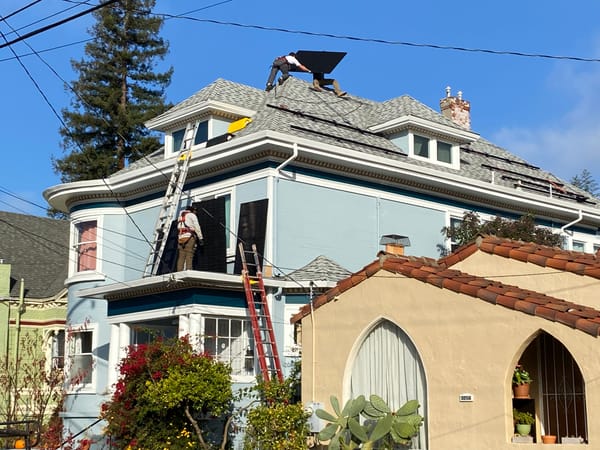
Virtual power plants (VPPs), on the other hand, can replicate the scale of these projects much faster by aggregating energy technologies connected virtually and operating in many homes or businesses. Controlled by software, solar panels, EV chargers, battery energy storage systems, heat pumps, smart thermostats, and other distributed energy technologies can be synced up to send power to, or reduce demand on, the grid as needed.
CPower, Sunrun, Uplight, and Voltus are among the many companies jockeying to operate virtual power plants in the U.S. But public sector players see a role for themselves in the space, too.
It turns out that one of the leading public sector VPP operators is in my own backyard.
MCE (formerly Marin Clean Energy) is a not-for-profit public agency that provides electricity to 1.5 million residents and businesses across Contra Costa, Marin, Napa, and Solano counties in Northern California. MCE is what we call a "community choice aggregator" (CCA) here in California.
The lingo can be confusing but it's really quite simple – using my own experience as an example. I live in Contra Costa County and am a customer of both Pacific Gas and Electric (PG&E) and MCE. PG&E operates the poles and wires and sends me a monthly bill; MCE procures, or builds projects to supply, the electricity my home draws from the grid.
MCE will soon launch an expanded virtual power plant program across its service territory called VPP-FLEX. This comes after it initiated a successful VPP pilot encompassing more than 100 homes and businesses in Richmond, California. I wrote about that project, and the three others supported by grants from the California Energy Commission's Advanced Energy Community program, last month.
I recently spoke with Sam Irvine, a senior strategic initiatives manager with MCE, to learn more about why the agency is so eager to scale up VPPs in the communities it serves.
The creation of virtual power plants "gives us the opportunity to generate new revenues, create savings, and really treat these distributed assets like power plants, so that they are seen on equal footing with other power purchasing options that exist in the market," he says.
The conversation has been edited for length and clarity.
Most people don't know what the term “virtual power plant” means. How do you describe VPPs to friends, neighbors, or family? And how do you explain their benefits?
It is a challenge to try to make that concept more accessible. It's definitely super wonky.
The way I like to think about it is that there's all sorts of devices out there in our homes and businesses that have become electrified as a result of California working on its climate and energy goals.
A virtual power plant aims to take those devices and sync them up so that they're working together in an optimized way. The reason the word “power plant” is in there is the idea is that these devices would become part of our generation energy mix, where they actually bring pockets of energy that are out there and untapped up into the energy markets.
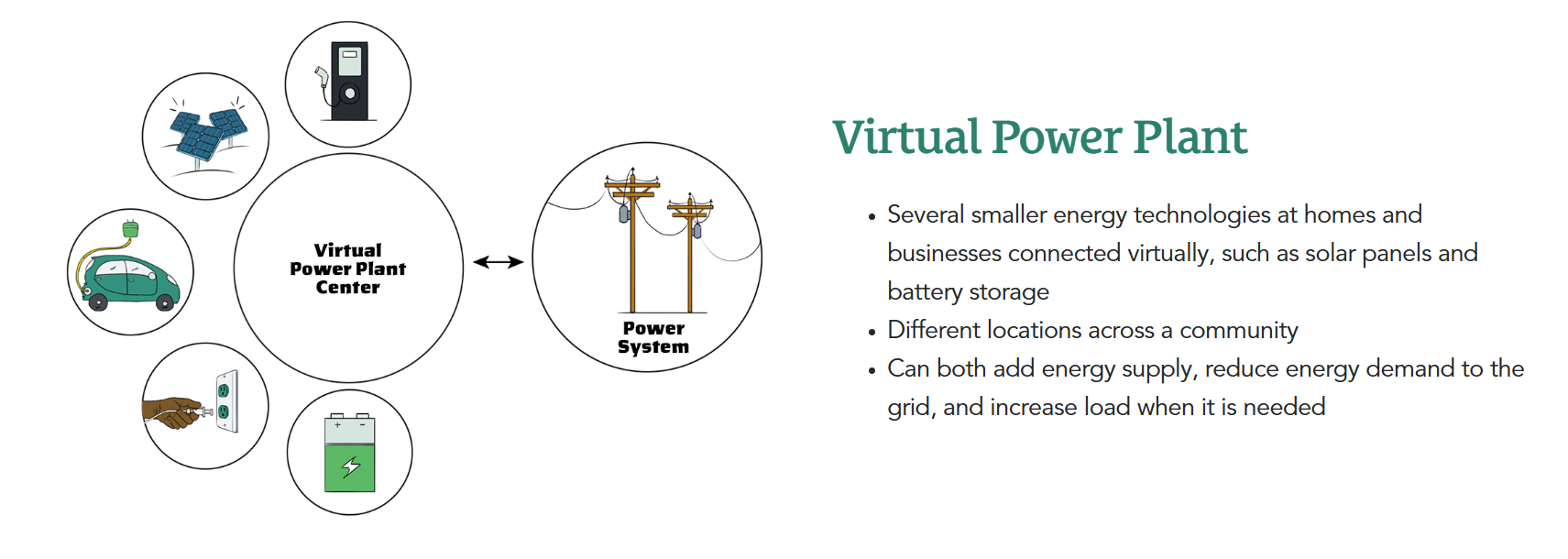
At MCE, when we think about a virtual power plant, we think about one that is linked, where those devices are viewed the same way as we're buying power from things like large-scale solar or a big wind energy system. They are a local option for our power resources team.
The VPP aspect is we're virtually stitching those devices together to get this meaningful amount of power that can shape and shift and behave differently than it is now.
An early proof of concept for MCE was a VPP pilot project in Richmond, California. How was that program designed and implemented? And what did you learn?
It's a really exciting but long road. The concepts came out of California Energy Commission grants over about a decade ago. There was a planning phase where the concept was researched, and the question at the time was: How can communities advance local energy solutions that promote equity, environmental, social, and economic benefit for participants?
Richmond was a participant in that program because it has been disproportionately impacted by environmental issues. It's also within census tracts that are priority populations that normally are overlooked in the energy transition.
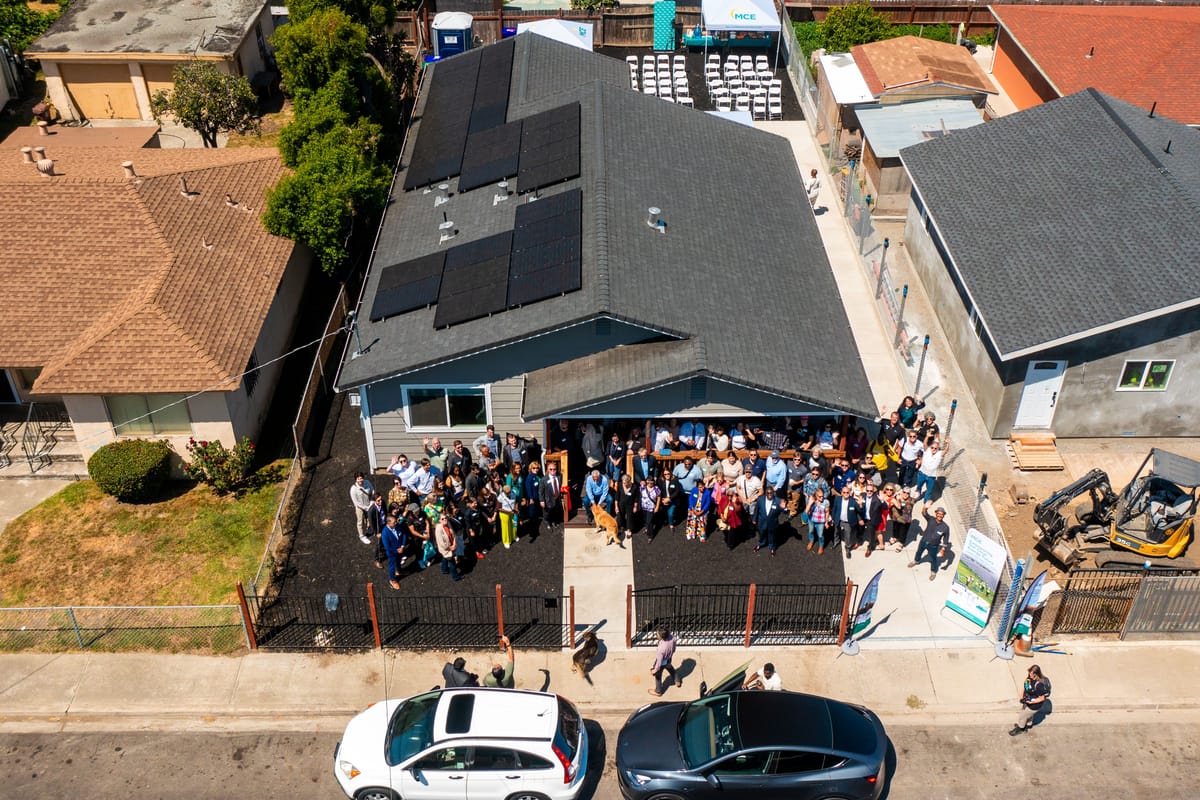
One really big success of the program was our partnership with RCF Connects (formerly the Richmond Community Foundation). They leveraged a unique funding mechanism that enabled them to acquire abandoned and blighted homes in the city of Richmond. These homes were often complete tear downs to their foundations. They used a revolving social impact bond to buy the home, renovate it, and then place it with a first-time, income-qualified homeowner.
Several homes were purchased and renovated, and then the grant came in to provide the equipment, the installation, and this software layer, the virtual power plant, to make those homes all-electric. Not only was the homeowner getting a renovated home, but one that, over its life, is more affordable to own and operate than if they had natural gas or another sort of energy system.
Homes had solar and storage, EV chargers, heat pumps, mini-splits, and induction stoves. They were linked to MCE’s virtual power plant platform and our software that lets us talk to those devices and get those devices to behave differently. The customer, in exchange, receives an on-bill credit for every type of device they had connected to that virtual power plant.
The other side of the project was we worked on deploying brand new non-residential equipment that would be integrated into the virtual power plant – things like solar, storage, EV chargers. There's a lot of energy improvements that can help small businesses and multi-family properties. They can stand on their own and create savings, but again, by bringing them into the virtual power plant, they can be further optimized.
We did things like add storage and EV chargers to a multi-family site that had too much solar. It was being sold back into the grid at a less than optimum value for the site because they were producing more than can be consumed in the facility. The solution there was: Let's put that extra solar into a battery and then sell it to public EV charging.
We learned a lot of lessons along the way. It's really challenging to do new deployments of equipment. There's long timelines. Interconnection takes a while getting batteries up and running. It can take years while you're waiting for PG&E approval and other required permits.
On the residential side, we really leaned into multi-language outreach and engagement. We worked with our Spanish-speaking staff, did multi-translations of our materials, to help residents understand what was in their homes with this equipment that they were getting. There's this gap between the technology and how people can access it and understand it can improve their lives.
In your presentation at The Climate Center's recent Advanced Energy Communities Symposium, you compared the suite of technologies available in a home to instruments in an orchestra and said there was a need for MCE, or CCAs in general, to act as a conductor for these technologies. What does that look like?
There's all sorts of devices. They don't all speak the same language. To use the metaphor, they're out of tune with each other. They're not in sync. That may be because you have a thermostat from one manufacturer, you have a heat pump from another.
Getting them to become interoperable with each other is a lift that requires code standards and a common framework. CCAs are well positioned to play this role in our virtual power plant. We're leveraging communication protocols that are open source, so we use open, automated demand response as a standardized way of sending a signal to these devices, and they receive it, change behavior, and then modify their load and give capacity back to the virtual power plant.
The more interesting story is how CCAs are positioned to play this function as the conductor of this aggregation of devices, and that is because of our nonprofit model. There is a lot of activity currently in the space to stitch these distributed systems together and change how they're behaving to generate revenue, and there are a lot of private sector stakeholders who do that role of being the conductor of the band.
But when a CCA does it, we are able to accrue the benefits and the savings back to the participants in a different way than those private sector stakeholders are, and that is predominantly because we have an existing billing relationship with the customer.
We can use bill credits. If we save costs for one participant, because we're buying power for them and all their neighbors, when we lower costs for one, or we get dispatch power from a customer who's participating with VPP, they're able to share it throughout their whole community. And those savings accrue through our whole rate book because we're able to buy power locally at a lower cost than we would have from the wholesale market when there's a lot of demand for things like wind and solar and storage. It lets us keep costs low for everybody.
Put differently, the money is not flowing to a private stakeholder or a venture capital group. It goes back into the community through our rate-making authority.
MCE has said that VPPs’ bidirectional flow capabilities gives them a unique ability to participate in the California grid operator’s day-ahead and real-time energy markets. What does that mean for how a CCA, like MCE, can participate in those markets and share the rewards with its customers?
All CCAs are scheduling coordinators, so we are able to participate in the California Independent System Operator's markets. You can both buy and place power into those markets. We are able, through our scheduling coordinator status, to do what's called “aggregation,” which is stitching these devices together, taking their flexible load and then bidding them into different markets. One of those is day-ahead. There's also proxy demand response, there's frequency – there's all sorts.
What's new is a CCA, in our case, MCE, working to leverage our existing status to be the aggregator, rather than relying on a third-party aggregator to do so. That does a couple of things. It makes it so that we can treat these pockets of distributed load like we would a power contract, which we are in the business of every day, of balancing the task of supply and demand of power across our whole service area.
This gives us another tool in the toolbox to help keep costs low and generate revenue. We take that revenue and those savings, and we accrue it back to the participating customer through our bill credits.
Something we're developing right now are also value-sharing agreements and pay-for-performance-based contracts that say, “Hey, if you are a vendor or a provider who brings us this capacity, you helped us get this power into the market, that's worth something.”
But we do it based on measured savings. Rather than paying upfront for capacity, we are compensating participants based on what we measure they did to help the grid and help the community and help MCE access this new opportunity that is participating in the wholesale market.
At the AEC Symposium, you described your theory of change: “All roads can lead to VPPs” and “procurement is the end game.” Explain what you mean.
MCE has a long history of existing programs. We've done all sorts of different electrification programs, EV programs, small- and medium-size business programs, and so as a result, a lot of devices have been deployed, often using funding from California Public Utility Commission funds. And those devices are serving their primary function of saving energy for the customer or whoever received them, but they are not part yet of this virtual power plant ecosystem.
By making them Internet of Things-enabled, making them able to communicate in open standards and receive a signal, means that those existing collaborative efforts can support the future optimization of these devices. So that's building the team, if you will, building the band.
The procurement part of is we go to the market and we participate and that gives us the opportunity to generate new revenues, create savings, and really treat these distributed assets like power plants, so they are seen on equal footing with other power purchasing options that exist in the market.
What is planned under MCE’s expanded VPP-FLEX program? How will it differ from the Richmond pilot?
We were fortunate to receive additional funding from the California Energy Commission to scale from the pilot throughout our whole service area. What that means is taking some of the tools that we developed in the pilot phase and making them available to everybody.
The main one is the customer-facing VPP tariffs. We have one for residential and non-residential. That's the mechanism that enables customers to be compensated for being part of the virtual power plant on their bills.
It's really about scale. It's about taking lessons and scaling the impact throughout our service area.
We have three ways that we're doing that.
Pillar one is we are integrating those historic programs to make them VPP adapted and ready. We are working with our historic programs and our customer programs team to identify crossovers between the programs that are already happening and the virtual power plant bringing those past devices or new ones that we're deploying through other efforts into the VPP – that all roads model.
The second pillar is we are continuing to deploy new equipment at non-residential facilities and then integrating that with the virtual power plant. We'll be doing a round of solicitations towards the end of this year for developers and financiers to come in and provide technical assistance to community sites, non-residential sites, to propose an adaptation of their facility that saves energy but also can result in virtual power plant value. We'll be helping serve our constituents with access to funding, financing, a turnkey, programmatic approach for building systems that save power, so it can be in the VPP.
The third pillar is we are going to do a number of integrations with existing equipment and our software platform, which is how we send and receive signals. We'll also do a Request for Qualifications for equipment manufacturers to come connect to our software, and in exchange they are able to participate in those pay-for-performance contracts. From that, we are getting additional capacity into the program, and then we will be bringing that into the wholesale market.