What I’m reading: China's EV dominance, fast-tracking heat pumps and plug-in solar in California, research roundup, and more


Quitting Carbon is a 100% subscriber-funded publication. To support my work, please consider becoming a paid subscriber or making a one-time donation.
Welcome back to another recap of highlights from what I’ve been reading.
A big thanks to all of you who took advantage of the end-of-year special offer to get one year of Quitting Carbon at a 25% discount. For anyone still getting caught up on holiday season email, who might have missed the offer, click here and you can still claim the discount.
And a reminder, you can send me story ideas, tips, and feedback via email at justingerdes@gmail.com or on Signal: JustinGerdes.85.
Thanks, as always, for reading.
China's EV dominance
Just how completely has China come to dominate the global EV market?
Writing last week in his newsletter, Cold Eye Earth, Gregor Macdonald notes that "global consumption of gasoline is starting to flatline."
Why? "This is due to China’s almost singular effort to remove ICE vehicles from the market," he writes. "If you blinked, you may have missed that EVs are now nearly 50% of China’s vehicle market – passenger cars and commercial vehicles combined."
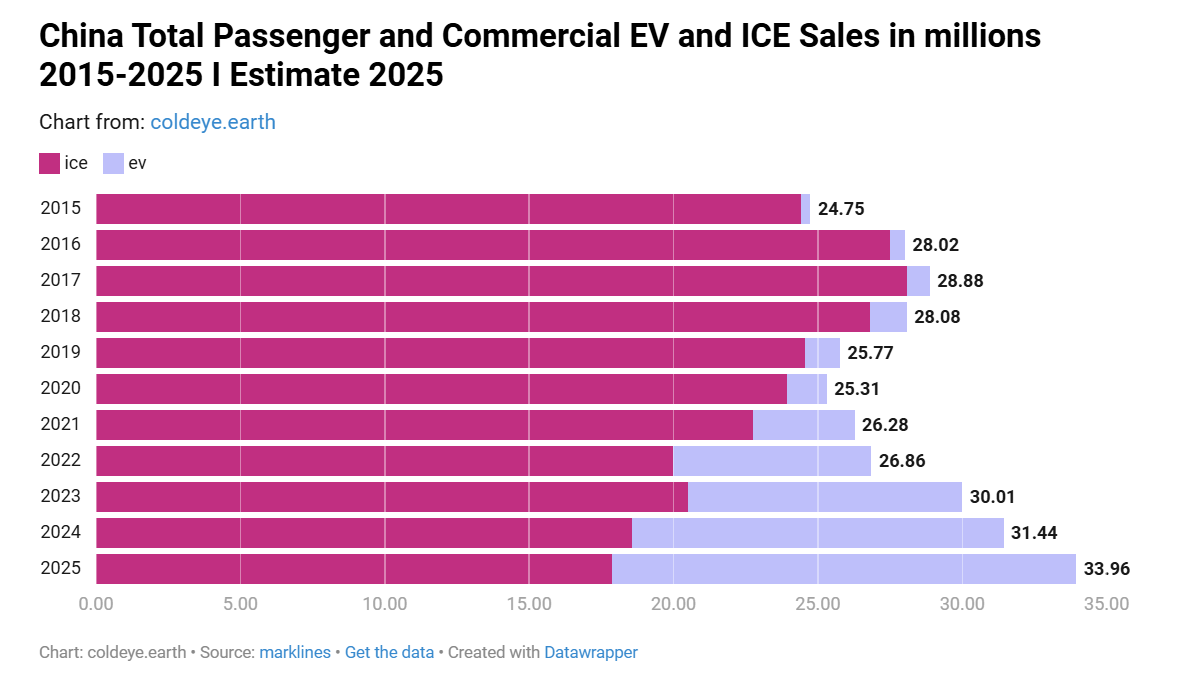
And now, having dislodged the incumbent internal combustion engine technology at home, China is working to do the same abroad.
Here's Macdonald on the "tectonic shift underway" because of China's EV initiative:
"The profound effect that the Chinese EV initiative is having on transportation fuel demand is now spreading outward, reaching markets across the non-OECD where legacy automakers like Ford and Volkswagen are now seeing much stiffer competition for sales. Here’s a representative data point that underscores the tectonic shift underway: Through the first 10 months of this year, China’s exports of EVs rose 90% compared to 2024, reaching more than 2 million units sold. How dominant has China become in world car markets? Well, Chinese EVs now have a whopping 75% share of EV sales in emerging markets (non-OECD nations). Ponder that data point for a moment. In a global vehicle market that runs at around 85 million units per year, 20 million of those units are now EVs. And China is providing 10% of that market now just through exports!" [emphasis in original]
California lawmaker wants to fast-track approvals for heat pumps and plug-in solar
The California Legislature is back in session and energy affordability once again is at the top of the agenda. On Tuesday, Senator Scott Wiener (D), one of the chamber's most powerful and effective members, introduced what he calls the "Clean Homes and Energy Affordability Package."
The package comprises bills to streamline permitting for heat pumps (SB 222) and approvals for plug-in solar systems (SB 868). This is Wiener's second attempt to streamline permitting for heat pumps, after a previous bill he introduced (SB 282) was held up in committee last year.
According to a press release, SB 222 would: mandate automated permitting for standard heat pump installations; prohibit HOAs from imposing architectural review on clean appliance installations; require a maximum of one permit for heat pump water heater installations; prohibit excessive setbacks, noise restrictions, or documentation requirements on heat pump installations; and cap fees for heat pump permits to the reasonable cost of providing service.
For a deep dive on plug-in solar, also known as "balcony" or "portable" solar, read my conversation with Meghan Wood, co-founder of startup Raya Power.
Research roundup
Here’s a roundup of noteworthy reports and studies you might have missed during the holiday season:
Driving demand for clean trucks: Last month, UC Berkeley’s Center for Law, Energy, and the Environment and the UCLA Law Emmett Institute on Climate Change and the Environment released a report identifying actions to increase demand for zero-emission trucks. The report includes recommendations for the California Legislature as well as state agencies and ports.
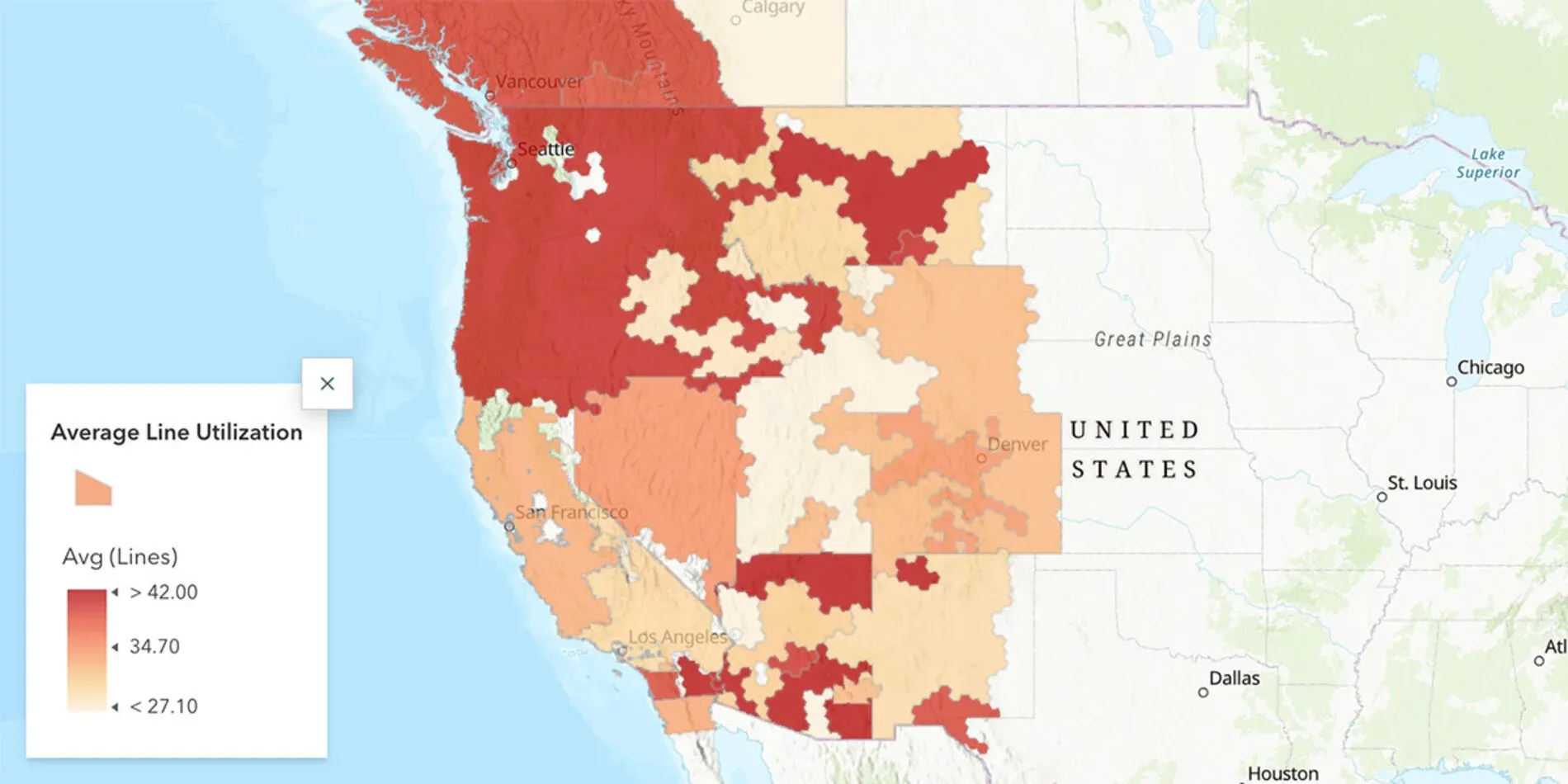
The underutilized grid in the American West: "The western U.S. and Canada electricity grid is significantly underutilized in many areas, and the fastest way to bring new data centers online is to unlock capacity on the existing grid," finds a new Stanford University study.
"Stanford researchers have identified significant areas of North America’s western electricity grid that are underutilized and good places to build data centers and new generators. Next, they recommend targeted replacement, refurbishment, and added flexibility of transmission assets before new transmission lines can be built," according to a press release.
Switching to electric stoves can slash indoor air pollution: Another Stanford University-led study finds that "gas and propane stoves emit substantial amounts of nitrogen dioxide, a pollutant linked to higher risks of asthma, heart and lung disease, and other conditions."
"Transitioning to electric stoves could cut nitrogen dioxide exposure in the U.S. by over 50%, potentially lowering health risks associated with these pollutants," according to a press release.
Electrification can slash factory emissions, too: "Switching to electricity could significantly and immediately slash [industrial] emissions in many places, according to a new report by The 2035 Initiative at the University of California, Santa Barbara," as recently reported by Canary Media’s Maria Gallucci.
"Electric versions of industrial boilers, ovens, and dryers are already available, and newer models promise to boost factories’ efficiency and curb energy costs even further," writes Gallucci.
That message, proven technologies exist today to enable even large manufacturers to get off fossil fuels and reduce their emissions, matches what I heard in my recent conversation with Industrious Labs’ Teresa Cheng.
Unlocking industrial electrification in California: I also heard from Cheng that policymakers could accelerate industrial electrification in California and beyond by revising electricity rates for manufacturers. Now Cheng and some colleagues are out with a new report fleshing out that concept.
"As California faces record-high electricity prices and federal funding cuts for clean energy investments, a new report from Industrious Labs, Sierra Club, and the American Council for an Energy-Efficient Economy, in collaboration with Synapse Energy, 'Unlocking Industrial Electrification in California' shows how updating California’s electricity rates can help manufacturers adopt zero-emissions heating equipment that cuts air pollution and climate emissions, while containing costs," according to an Industrious Lab press release.
Adjusting electricity rates in the Northeast to unlock efficiency and electrification: A new Northeast Energy Efficiency Partnerships (NEEP) report reaches similar conclusions.
"The report explores how modern rate design can drive energy efficiency, align with electrification, encourage demand flexibility, and embed equity and affordability into the very structure of rates. Drawing on practices already emerging in the region – from time‑of‑use rates to peak time rebates and seasonal structures – the report illustrates how smarter rate design can be layered with customer education and protections for vulnerable households," according to a NEEP press release.
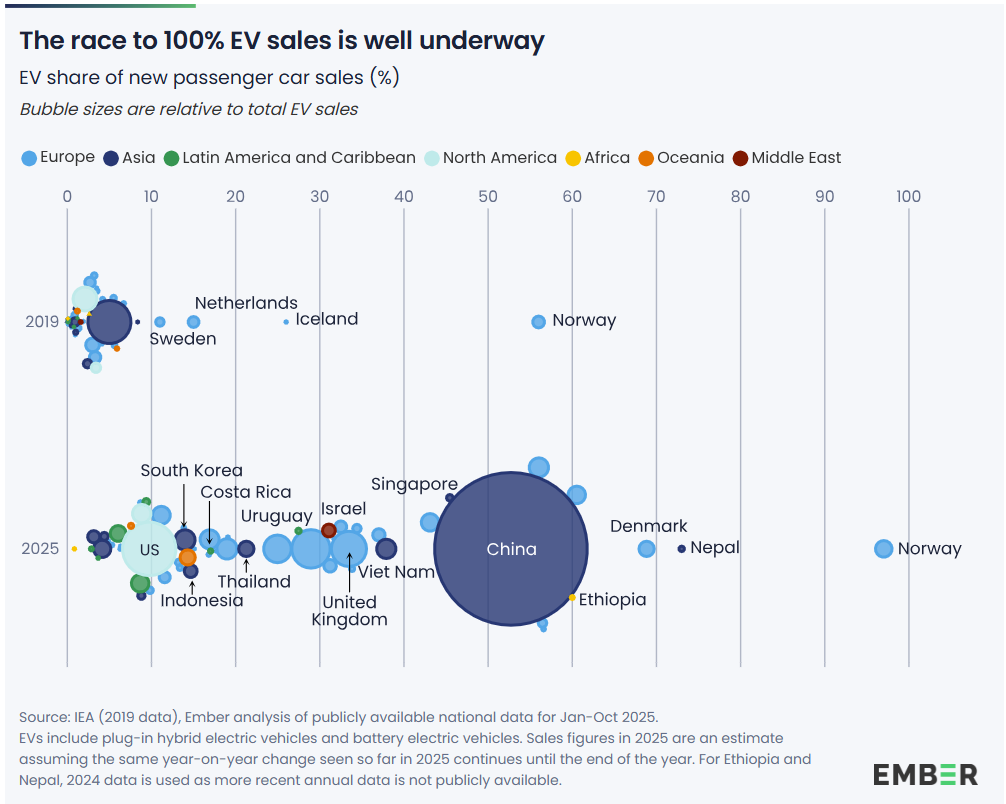
Milestone: EVs made up over a quarter of global car sales in 2025: A new report from think tank Ember finds that electric vehicles accounted for slightly more than 25% of global new car sales last year.
"39 countries have reached an EV sales share larger than 10% in 2025, a third of which are outside Europe. In 2019, there were only four countries that had reached this milestone, all within Europe. Notably, China reached over 50% EV sales share for the first time this year. Between January and October 2025, EVs have made up over a quarter of global new car sales, up from less than 3% in 2019," according to an Ember press release.
"This is a major turning point. In 2025, the centre of gravity has moved. Emerging markets are no longer catching up, they are leading the shift to electric mobility," said Ember analyst Euan Graham.
Congestion pricing is working in New York: "Congestion pricing by a number of measures is working as planned, a reality that may turn New York’s experiment into a blueprint for other US urban centers," Michelle Kaske and Aaron Gordon reported last month for Bloomberg.
"Early indicators point to a significant drop in pollution in parts of Manhattan, according to a Cornell University study, with traffic declining by 11% in the tolled zone. The Metropolitan Transportation Authority, which implemented the new toll, is poised to beat its target this year of generating $500 million of revenue from the program after expenses. And the business impact in the district, which runs from 60th street to the southern tip of Manhattan, doesn’t appear to be as onerous as some had feared," write Kaske and Gordon.
LNG exports are driving up Americans’ energy bills: One of the reasons U.S. electricity bills are up 13% compared to last year "is the growing export of liquefied natural gas and a corresponding spike in gas prices, argues a new report from Public Citizen," as Kiley Bense reported last month for Inside Climate News.
"The analysis, based on data from the U.S. Energy Information Administration, found that Americans paid $12 billion more for natural gas between January and September 2025 than they did over the same period last year. Because natural gas is used to heat homes directly and to power the electric grid, its price has an outsized impact on Americans' utility bills," writes Bense.
"Higher exports leave Americans more exposed to swings in the global market," she notes. "LNG exports were up 22% this year, according to the report. While the U.S. is already the world’s largest exporter of the fuel, the second Trump administration has made increasing LNG exports a priority."
Offshore wind farms can create fish havens: "Certain species of fish can be up to two times bigger when living in protected offshore wind farm zones, a new study has found," as reported last month by Renew Economy’s Rachel Williamson.
"Not only do the rough surfaces of turbine monopiles and submarine cables provide new habitats for sponges, corals, anemones and other sessile organisms, but that extra food source allows other creatures to thrive as well," she writes.
"The results from the paper are very encouraging – they show wind turbines create a different localised marine environment with many positive attributes," said Murdoch University emeritus professor Neil Loneragan, a coauthor on the paper in Global Ecology and Conservation.
Bonus 1: Brazilian researcher perseveres to advance prize-winning climate solution
Never doubt the grit, resourcefulness, and persuasive powers of a determined woman.
Last week, the Washington Post's Nicolás Rivero published a profile of Brazilian agronomist Mariangela Hungria.
Hungria was awarded the 2025 World Food Prize for her decades of work on the use of "biologicals" in agriculture.
"Her research showed that instead of using pricey and polluting nitrogen fertilizers, farmers could spray their fields with microbes that have evolved over millions of years to pull nitrogen out of the air and fuel plants’ growth," explains Rivero.
Hungria won over skeptical farmers by organizing barbeque and beer parties to talk to members of local soy farmer cooperatives.
"At that first party, Hungria spoke to hundreds of soy farmers who worked small plots in the region. By the end, she said, the crowd applauded and the agronomist [at the local soy farmers’ cooperative] apologized for blowing her off," writes Rivero.
Hungria's persistence paid off.
"Today, 85 percent of Brazilian soybeans are grown using the bacteria fertilizers Hungria and her colleagues developed. Their work saves farmers about $25 billion on fertilizer costs and prevents 54 million cars’ worth of greenhouse gas emissions every year," according to Rivero.
Bonus 2: Portland's Mt. Tabor Park
I spent the week between Christmas and New Year's in one of my favorite place on Earth, Portland, Oregon. Among the highlights on this trip was discovering Mt. Tabor Park.
I've been visiting Portland regularly for more than 25 years and had never been to this urban gem – 176 acres of forested walking paths on a dormant cinder cone volcano surrounded by residential neighborhoods on the city's east side.
On the cold but clear day I visited, the views – of Mt. Hood to the east, Mt. Adams to the northeast, and downtown Portland to the west – were breathtaking.




Views from Mt. Tabor Park, Portland, Oregon. Credit: Justin Gerdes.