A repowered California wind farm rises in a birthplace of the industry
Quitting Carbon recently toured Brookfield Renewable U.S.' Mulqueeney Ranch Wind Repowering Project in Northern California's Altamont Pass, one of the sites where today's wind power industry was born.

Quitting Carbon is a 100% reader-supported publication. Support independent energy journalism by becoming a paid subscriber or making a one-time donation.
The Altamont Pass has hosted some of the world's oldest wind farms. Turbines started spinning to provide electricity in the area beginning in the early 1980s.
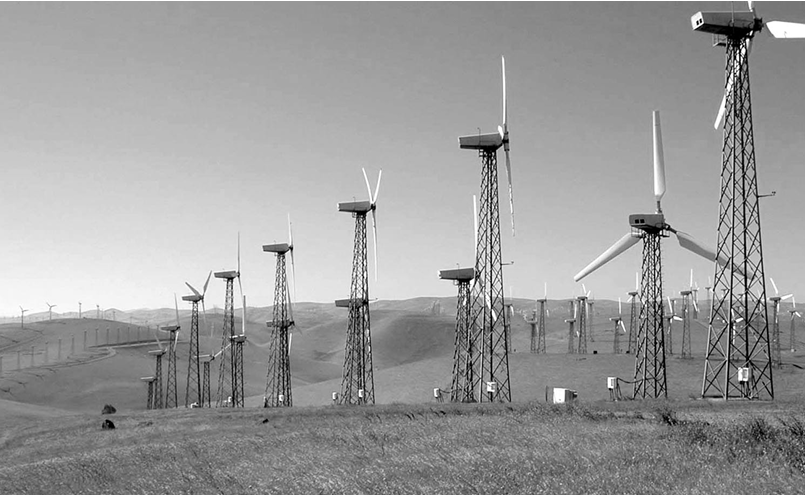
But what came to be known as the Altamont Pass Wind Resource Area (APWRA) developed into an ungainly thicket of turbines that at one time was the world's largest wind farm. Some 6,700 wind turbines sprawled across the rolling hills that straddle both sides of I-580 near Livermore, California.
But in recent years, much like how a crowded tangle of trees in a young forest is thinned by fire or blade to leave only the healthiest trees standing, the Altamont Pass' turbine thicket is being replaced by larger, more powerful turbines, standing far from their neighbors.
The area is now one of the best places in the world to witness the benefits of what the wind industry calls "repowering."
Repowering can comprise replacing individual turbine components – such as the gearbox or blades – to extend the life of an existing wind farm. Or, as is the case in the Altamont Pass, removing obsolete turbines and replacing them with new, more powerful turbines.
Repowering often enables a project owner to maintain, or even increase, power production on the same footprint with a fraction of the turbines.
Last week, on a tour organized by the regional electricity provider *MCE and hosted by Brookfield Renewable U.S., I visited the Mulqueeney Ranch wind project to see what repowering in the Altamont Pass looks like first hand.
The potential for wind repowering in the U.S.
Aging wind farms across the U.S. are ripe for repowering.
"By replacing aging turbines with modern technology at existing sites, the United States could more than double its current onshore wind capacity and electricity generation without requiring new land," write the authors of a Stanford University study published in March.
The study finds that repowering could increase the U.S.' onshore wind nameplate generating capacity from 153 gigawatts (GW) (as of 2024) to 314 GW at existing wind farms.
"Repowering is a key, yet overlooked, strategy to accelerate the transition to a sustainable energy future in the United States," the authors conclude.
Data from the energy consultancy Wood Mackenzie confirms the near-term repowering opportunity in the U.S.
"The repowering market remains strong, as Wood Mackenzie projects that 18 projects will drive 2.5 GW of capacity additions in the next three years," according to a December 2025 WoodMac press release.
Mulqueeney Ranch wind farm
Not far from the massive Pacific Gas and Electric Tesla Substation, construction crews are assembling turbines for Brookfield Renewable U.S.' Mulqueeney Ranch wind farm.
On the day of my visit, crews had already assembled 10 of the 19 turbines approved for the project. Construction is expected to be completed later this year.
Weather permitting, turbines can be installed in as little as two days, according to Brookfield's Jared Cooley, director of construction for the project.
The 19 new turbines – each a 4.5-megawatt model from Danish manufacturer Vestas – will supply as much electricity, 80 megawatts, as the 400 turbines that had previously stood at the project site.
Similarly, the Stanford study cites a recent repowering project in the Altamont Pass that replaced 569 100-kilowatt turbines (56.9 MW) with just 23 new turbines with a combined capacity of 57.5 MW.
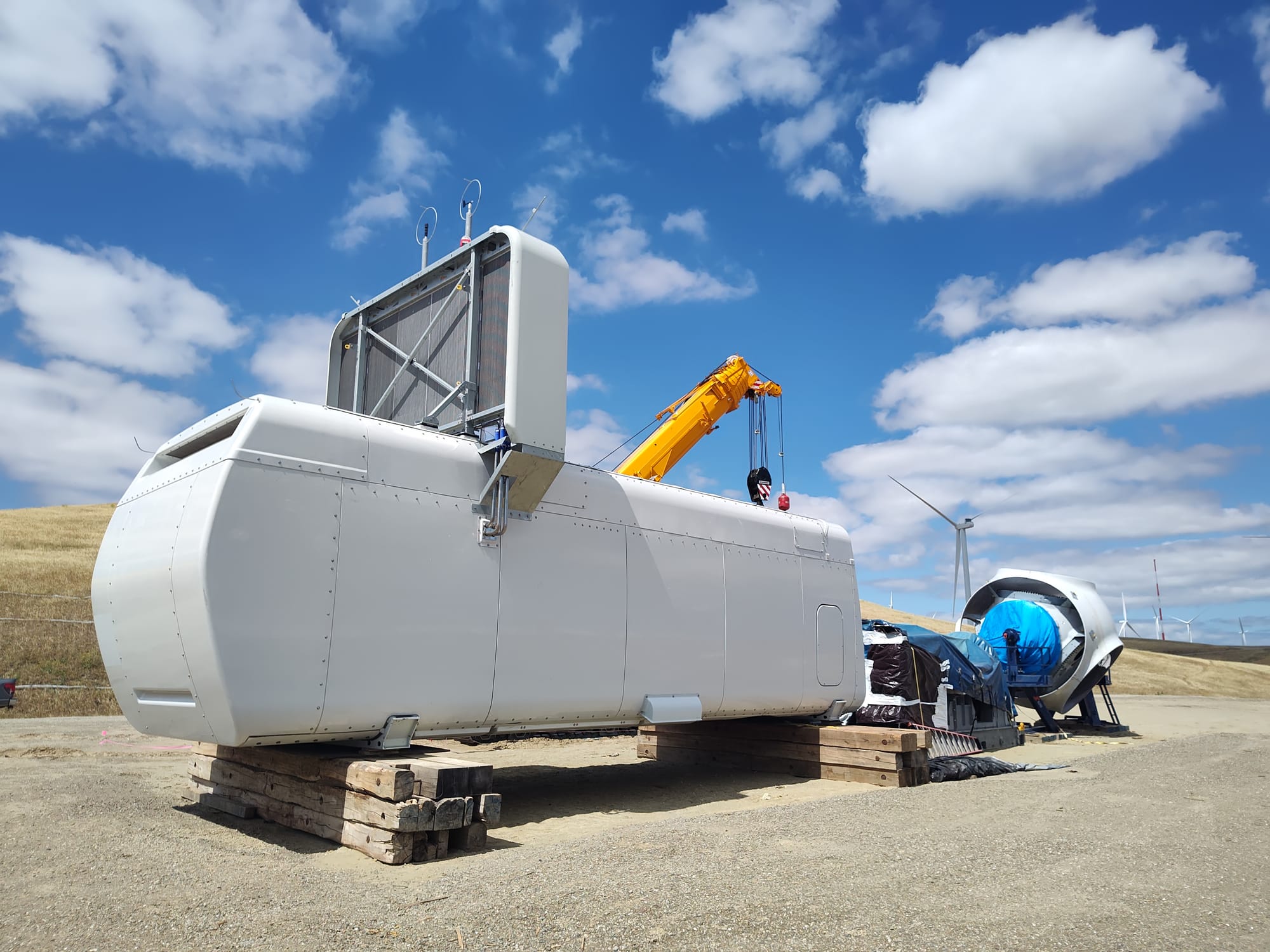
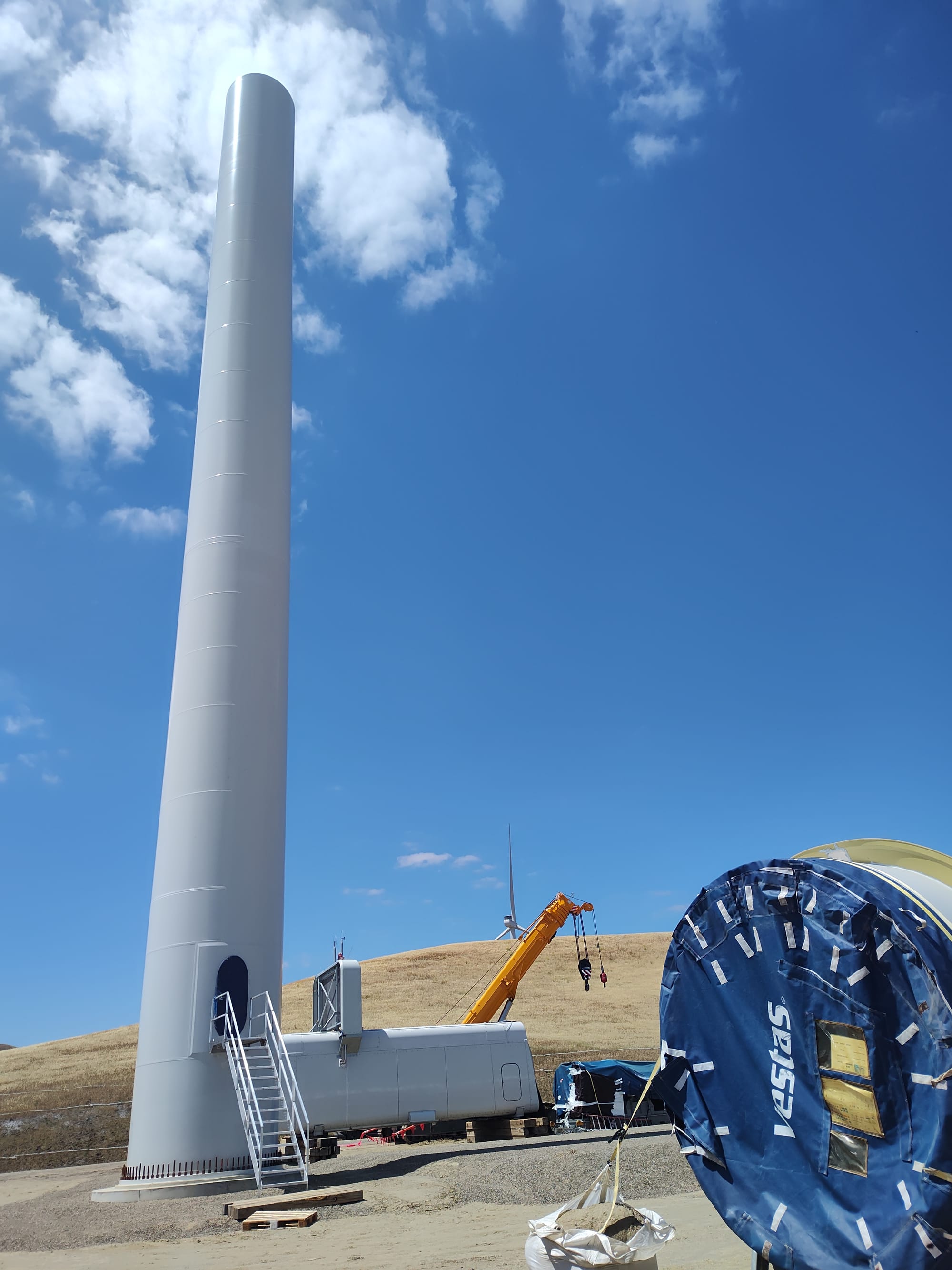
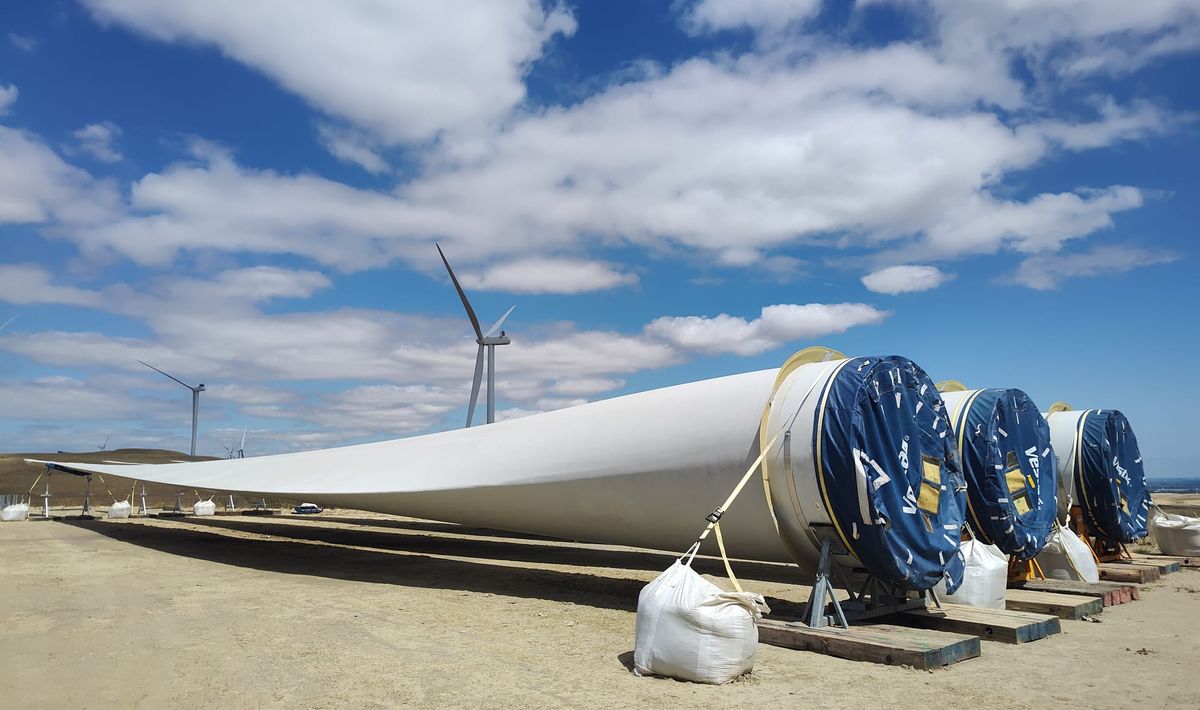
The nacelle, generator, gearbox, and hub staged for assembly (left/top). A tower awaits installation of the nacelle and rotor (right/bottom). Credit: Justin Gerdes.
MCE, which provides electricity to 1.8 million residents and businesses across Contra Costa, Marin, Napa, and Solano counties in Northern California, is the primary offtaker for the Mulqueeney Ranch project.
The not-for-profit public agency signed a 20-year agreement with Brookfield subsidiary Mulqueeney Wind Energy LLC to purchase 75% of the power generated by the project, Brookfield Renewable U.S. VP for Commercial Development Steven Eckert told me. He added that the offtaker for the final 25% has not been made public, and that the project will qualify for federal tax credits.
The project is expected to supply electricity when MCE needs it most, including on summer evenings, after California's solar power plant fleet stops producing power.
"The project provides generation in hours beneficial to shaping MCE’s supply curve to align with its load profile," according to a September 2025 MCE staff report.
"Energy and RA [resource adequacy] capacity produced by the facility will complement MCE's existing portfolio of resources. ... The project would provide certainty through fixed-priced renewable energy and RA mitigating MCE's long-term market risk," the report states.
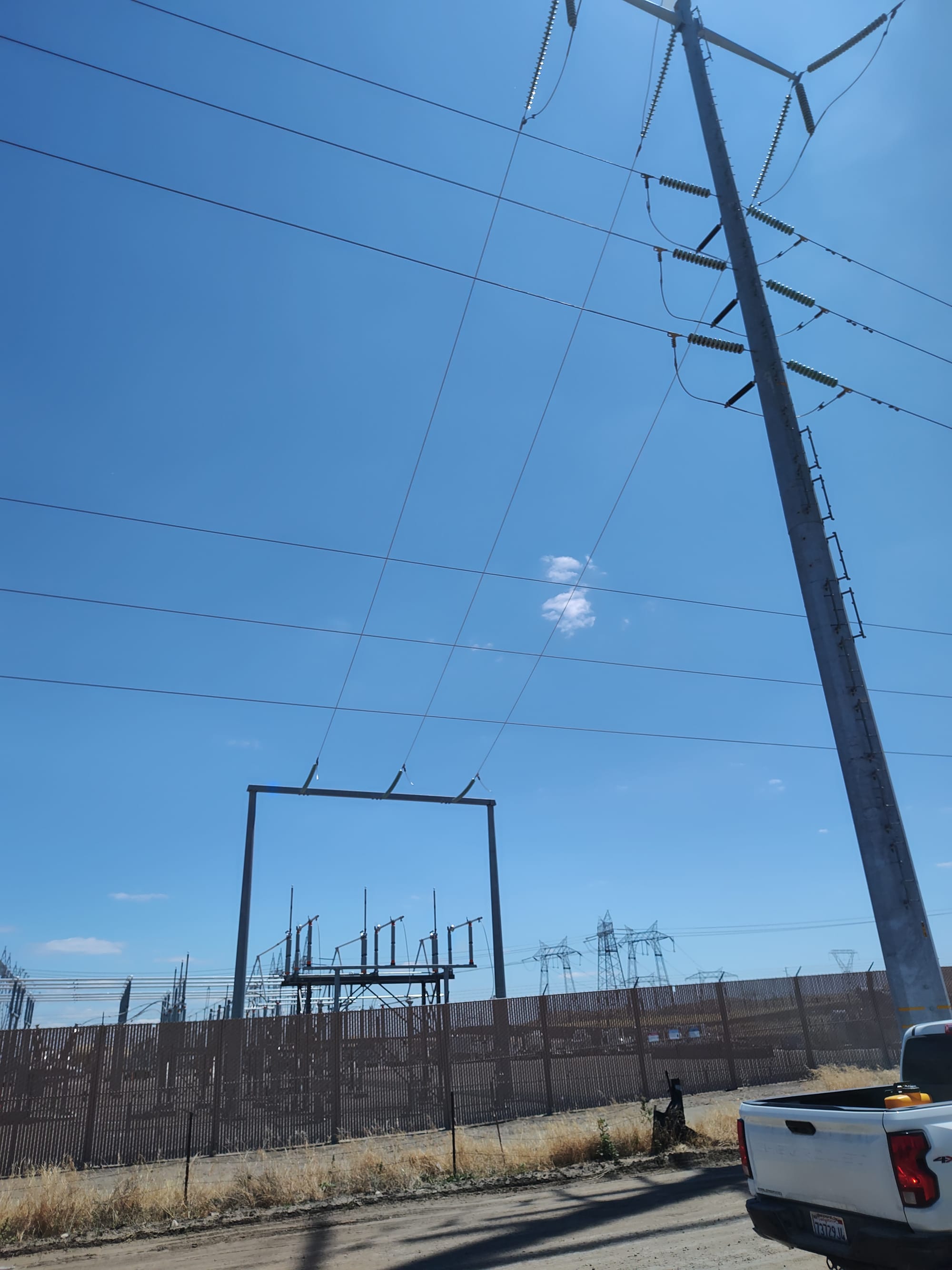
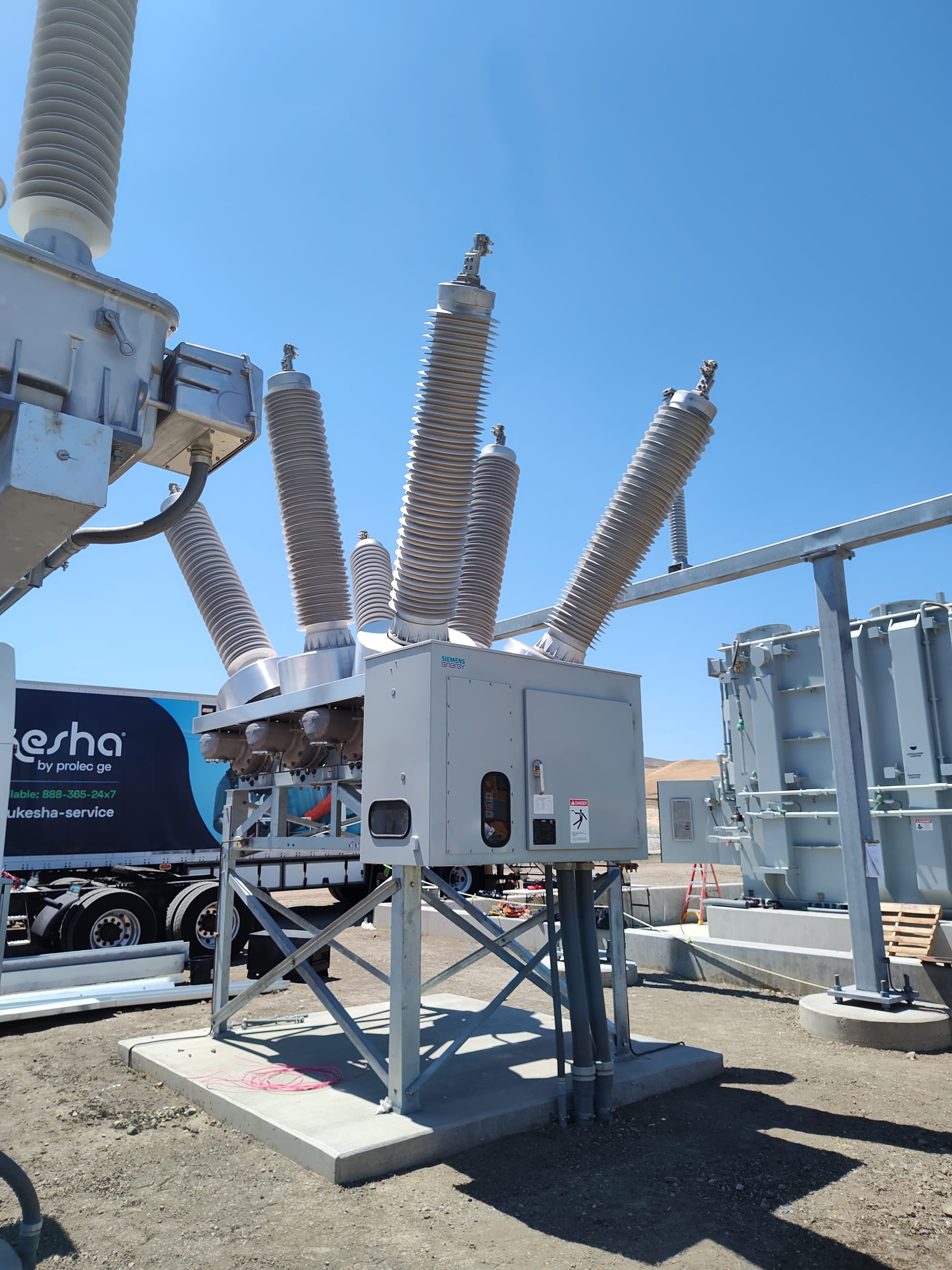
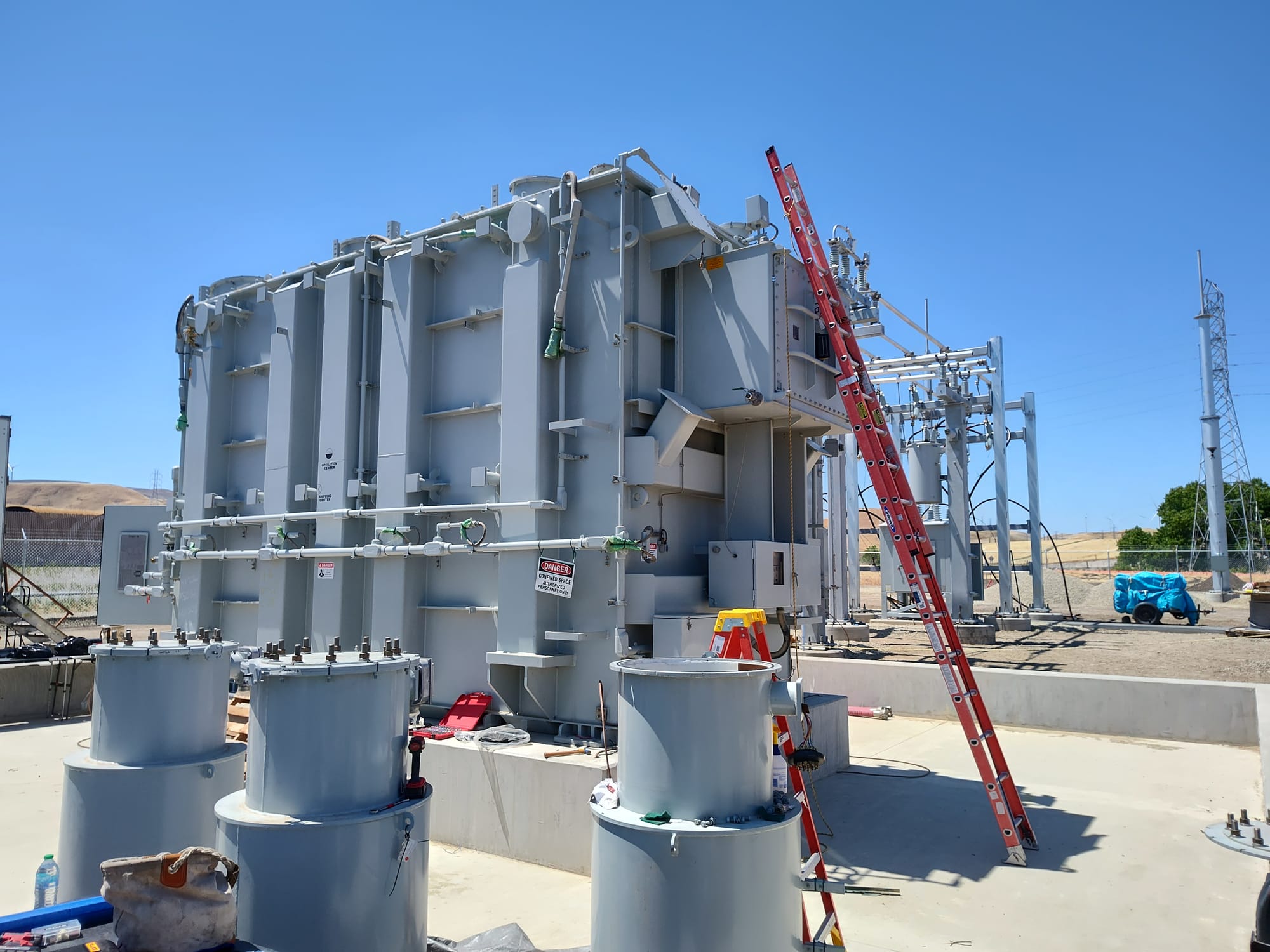
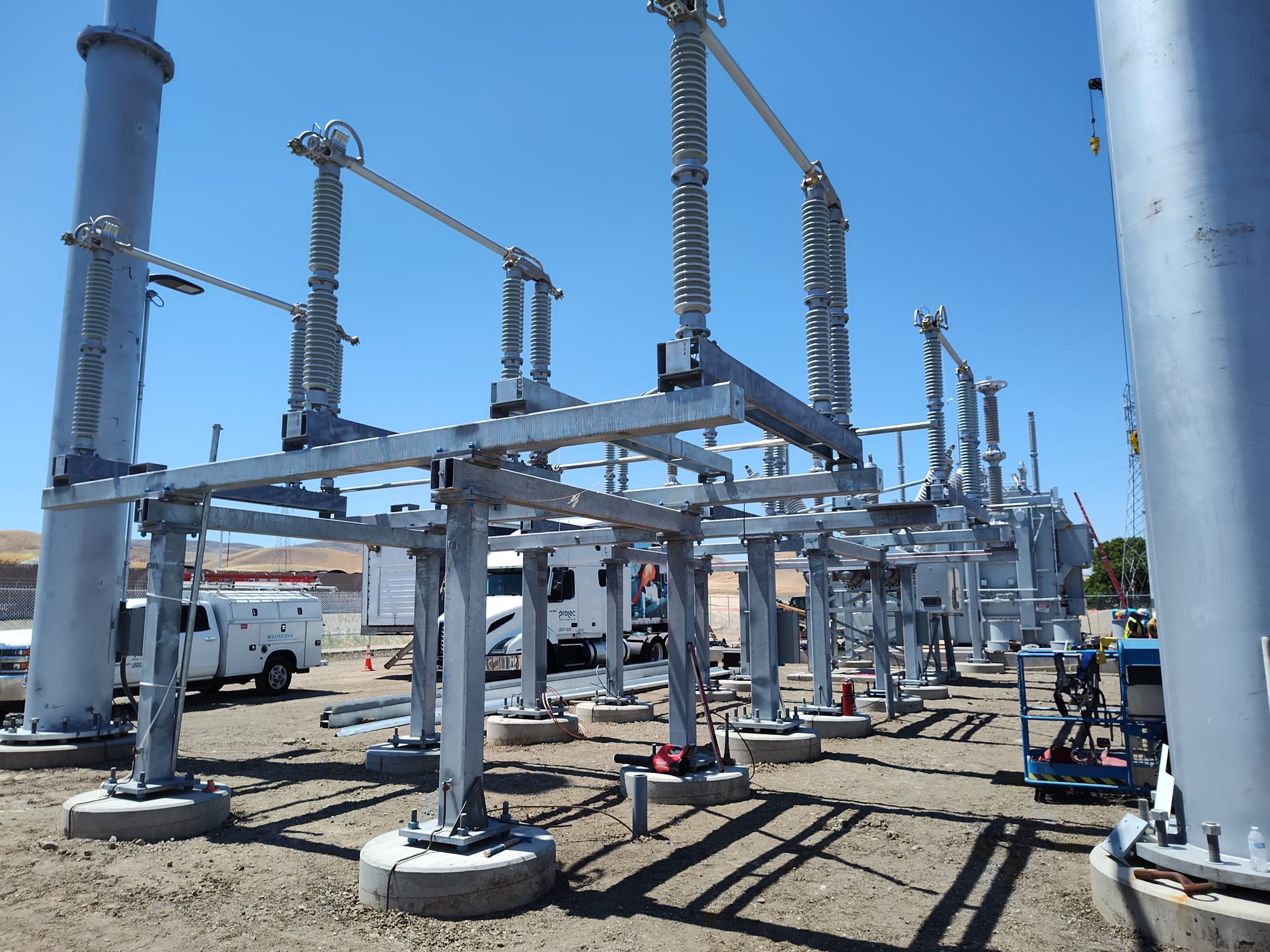
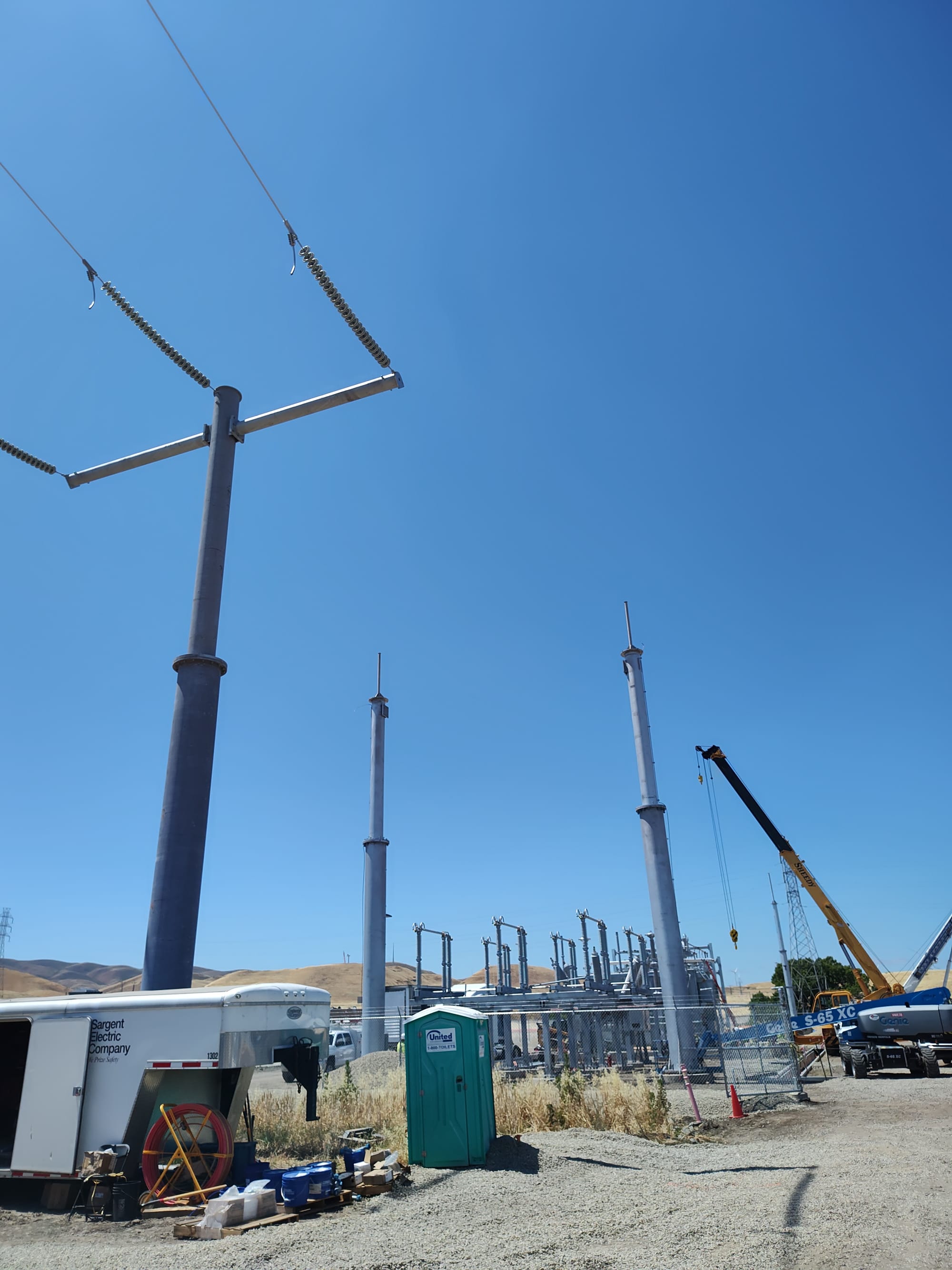
On the day of my visit, a crew was installing components at the point where the Mulqueeney Ranch wind project's underground electrical utility collection and distribution connection lines meet PG&E's Tesla Substation. Credit: Justin Gerdes.
Mitigating impacts to birds
The early haphazard clustering of turbines in the Altamont Pass wasn't just a visual blight, it proved deadly for migrating birds, too.
"Historically, the APWRA caused significant avian and bird fatalities," write the Stanford researchers. "The APWRA is habitat to raptors and early wind turbine installations caused significant fatalities before the highest risk turbines were permanently decommissioned."
Fewer turbines, spaced further apart, and equipped with modern bird-detection technology such as IndentiFlight, should reduce bird mortality in the Altamont Pass going forward.
"Brookfield Renewables has designed the [Mulqueeney Ranch] site and implemented state of the art technology to mitigate impacts to local and migratory avian species," according to the MCE staff report.
"Turbines will be equipped with individual AI paired cameras to detect the presence of avian species which would trigger feathering/shut-off of specific turbines."
A generation from now, bird-detection technology will be better still.
Brookfield's Cooley noted that his company has operating wind projects that came online as far back as 2005.
The repowered Mulqueeney Ranch wind project should operate for at least 25 to 30 years, he added.
And then it will be time once again to continue the cycle of wind power innovation and renewal in the Altamont Pass.
*Disclosure: MCE provided my transportation to and from the Mulqueeney Ranch wind project site from Livermore, as well as lunch after the tour. Thank you, Jackie Nuñez and Jenna Tenney, for the invitation to join the tour!