What I’m reading: California bolsters its grid and advances a plug-in solar bill, checking in on Australia's energy transition, the “Great Clean Energy Acceleration 2.0,” and more
Quitting Carbon's biweekly roundup of energy transition developments you might have missed.


Quitting Carbon is a 100% subscriber-funded publication. To support my work, please consider becoming a paid subscriber, making a one-time donation, or gifting a paid subscription.
Welcome back to another recap of highlights from what I’ve been reading.
First, a few quick asks. If you enjoy and value what you read here at Quitting Carbon, consider sharing this newsletter with someone in your life who might enjoy it, too. The developers at Ghost just made it very easy to gift a paid subscription to newsletters like this one.
You can gift a paid subscription to Quitting Carbon here.

Next, you can help make Quitting Carbon a “Preferred Source” in Google Search.
According to Google, “people are twice as likely to click through to a Preferred Source.” You can designate Quitting Carbon (or any other favorite, trusted site) a Preferred Source here.

Now, on to this week's roundup. Have a great weekend and thanks, as always, for reading.
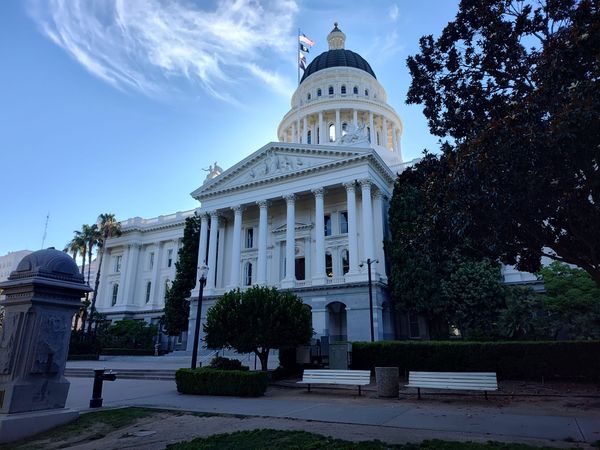
California bolsters its grid to boost renewables
California continues to make grid investments that will enable the Golden State to meet its long-term climate and energy targets.
Last week, the board of the California Independent System Operator (CAISO), which manages most of the state’s grid, approved a transmission plan comprising more than three-dozen projects needed to meet rising electricity demand and to support renewables growth.
The 38 transmission projects costing an estimated $6.7 billion will enable the state’s grid to accommodate 45 gigawatts (GW) of new solar, including more than 20 GW from the massive Valley Clean Infrastructure Plan, and 8 GW of in-state wind generation capacity.
In addition to new transmission lines, the plan also included upgrades to get more out of the transmission corridors that already exist.
“This year’s plan includes 12 reconductoring projects that increase transmission capacity without having to build new transmission from scratch,” said CAISO in a press release.
“Three of these will employ advanced conductors, which are one of a suite of grid-enhancing-technologies, or GETs, that the ISO routinely considers in its planning efforts.”
More headroom could be created on California’s grid if electricity-using appliances such as heat pumps, pool pumps, and EV chargers responded to dynamic prices.
“A Lawrence Berkeley National Laboratory study has estimated that six types of electricity-using equipment responding to dynamic electricity rates could reduce peak electricity demand in California by up to 8.75 GW by 2030,” writes PV Magazine’s Wiliam Driscoll.
“This study offers a first comprehensive analysis of the technical potential and cost effectiveness of customer response to hourly dynamic prices across key sectors and end uses in California,” write the study authors.
California plug-in solar bill advances
Californians eager for access to more affordable solar power are much closer to being able to install portable solar generation devices at home.
State Senator Scott Wiener’s (D) bill to streamline approvals for plug-in solar systems (SB 868) passed out of the Senate by a 35-1 vote on May 19. The bill now awaits a floor vote in the Assembly.
Checking in on Australia’s energy transition
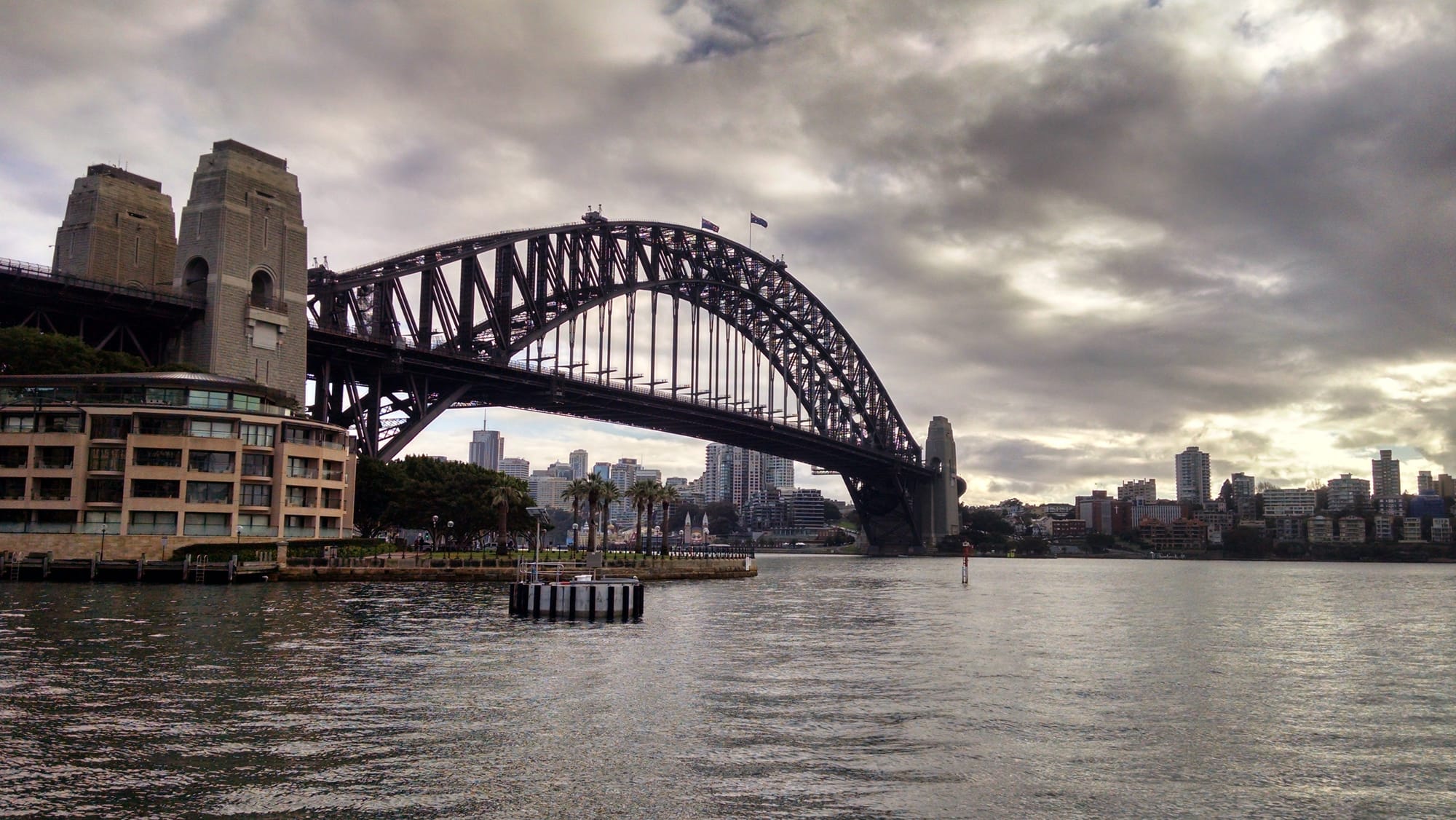
Longtime readers know one of my favorite energy transition stories is unfolding in Australia.
Let’s check in on some of the important milestones you might have missed since my last roundup of energy innovation developments from Down Under.
Australia, like California, Texas, and other high-penetration renewables grids around the world, is benefiting from the plunging costs for batteries.
“Brookfield Renewables, the owner of Australia’s most successful developer of large-scale battery projects, says that costs continue to fall and have now plunged between 65 and 70% over the last two years,” Renew Economy’s Giles Parkinson reported on May 10.
Cheap batteries are finding their way into hundreds of thousands of Australian homes, too.
“Australia has surpassed 400,000 home battery storage installations under the federal government’s Cheaper Home Batteries Program, reaching 11.2GWh of cumulative storage capacity in less than a year since the scheme launched,” Energy Storage News’ George Heynes reported on May 18.
“Climate change and energy minister Chris Bowen announced the milestone on 16 May, noting that installations are proceeding at approximately 2,000 batteries per day,” he added.
The surge of solar, wind, and batteries coming online in Australia is also pushing electricity prices downward – even amid the global fossil fuel crisis.
“Electricity costs will fall for households and businesses on most parts of Australia’s main grid, as wind, solar and battery storage combine to push down wholesale electricity prices and to insulate the local market from the global volatility being created by conflict in the Middle East,” Parkinson’s colleague Sophie Vorrath reported on Tuesday.
For example, she writes, in Victoria “the state’s regulator confirmed the cost of electricity will fall in all five of the state’s electricity distribution zones, cutting household energy bills by an average of $84 in the coming financial year and by an average of $241 a year for small businesses.”
And on the horizon, large-scale offshore wind production is coming into view, as Australia’s first offshore wind farm just cleared a key environmental review hurdle.
“The 2.2-gigawatt Star of the South project proposed for construction off the coast of Gippsland in Victoria has officially launched its bid for environmental approval, marking a major new milestone for Australia’s fledgling offshore wind industry,” writes Vorrath.
Victoria plans to hold Australia’s first offshore wind auction in August, with a target of 2 gigawatts of capacity in the water by 2032 and 9 GW by 2040. The state’s Labor government pledged earlier this month to invest $124 million ($89 million USD) in the proposed Victorian Renewable Energy Terminal.
One of Australia’s most promising clean energy exports are battery powered ships that are – for now – the world’s largest electric ferries.
Tasmanian shipbuilder Incat powered up the 130-meter (426-foot), battery electric ferry, the China Zorilla, for the first time at its shipyards north of Hobart last December. The ship is destined for service on a route connecting Buenos Aires, Argentina, and Uruguay.
The shipbuilder also has orders to supply three large battery electric ferries to Danish ferry operator Molslinjen as part of the “world’s largest electrification project at sea.”
The China Zorrilla’s 40 megawatt-hour battery system comprises more than 5,000 lithium-ion battery modules that together weigh 260 tons.
“The energy storage system is four times larger than any current installation,” Incat’s manager of public relations and corporate affairs, Tom Cooper, told The Driven’s Anne Delaney.
But for now, the ship that is a harbinger of a fossil-free maritime future is stuck at anchor in Hobart.
The heavy lift transport ship that was to carry the China Zorrilla to its port of duty in South America is stuck in the Persian Gulf, unable to pass through the Strait of Hormuz, because of the U.S.-Israeli war on Iran.
The “Great Clean Energy Acceleration 2.0”
Michael Liebreich, the founder of New Energy Finance (now BloombergNEF) and now the chairman and CEO of Liebreich Associates, is out with a new essay analyzing what the U.S.-Israel war against Iran portends for global energy markets and the clean energy transition.
“We are about to see the Great Clean Energy Acceleration 2.0,” he writes, “a discontinuity in energy markets as profound as the oil shocks of the 1970s, and one that could bring forward the peak in fossil fuel use and emissions to this side of 2030.”
The disruption to global energy markets caused by Russia's invasion of Ukraine “will prove to be just a foretaste of what we are about to see.”
Why? Asia didn't feel the full brunt of the economic disruption from that war:
During the Great Clean Energy Acceleration 1.0, Asia was insulated from the worst economic impact of the Russia-Ukraine war. Indeed, China and India were able to buy sanctioned oil, gas and related commodities at discounted prices. This time, Asia is directly affected, being the destination for over 80% of the oil and gas that normally passes through the Strait of Hormuz. Can we imagine any world in which India, China and Asian nations do not dramatically accelerate their efforts to reduce that painful vulnerability?
The U.S.-Israel war against Iran “is going to make it impossible to obscure the immediate externality costs of commodity price volatility.”
So, what comes next? Here's Liebreich's view of the future:
Where the first Great Clean Energy Acceleration took renewables to the point where they were absorbing all growth in electricity demand globally, the Great Clean Energy Acceleration 2.0 is set to take renewable energy (with a tiny bit of help from nuclear power) to the point where it absorbs all growth in energy demand.
We should now see peak fossil fuels and emissions this side of 2030.
The Accidental Climate President?
By attacking Iran, the US unwittingly unleashed another round of acceleration in the world’s long-term shift to clean energy. Indeed, this may well have set in motion a chain of events that pushes the fossil fuel industry into retreat in the next few years, after nearly three centuries of consistent growth that has defined the modern era and triggered the Anthropocene.