What I'm reading: Special research roundup edition
Quitting Carbon checks in on recent energy transition research you might have missed with a special roundup of notable reports and studies.

Quitting Carbon is a 100% subscriber-funded publication. To support my work, please consider becoming a paid subscriber, making a one-time donation, or gifting a paid subscription.
It is vacation – and World Cup! – season, so chances are you might have missed some important reports and studies published in recent weeks.
To get us all caught up, I've compiled a special roundup of not-to-be-missed research on the energy transition, starting with some big-picture good news on global renewable energy and battery energy storage deployment.
2025 was a record year for solar globally
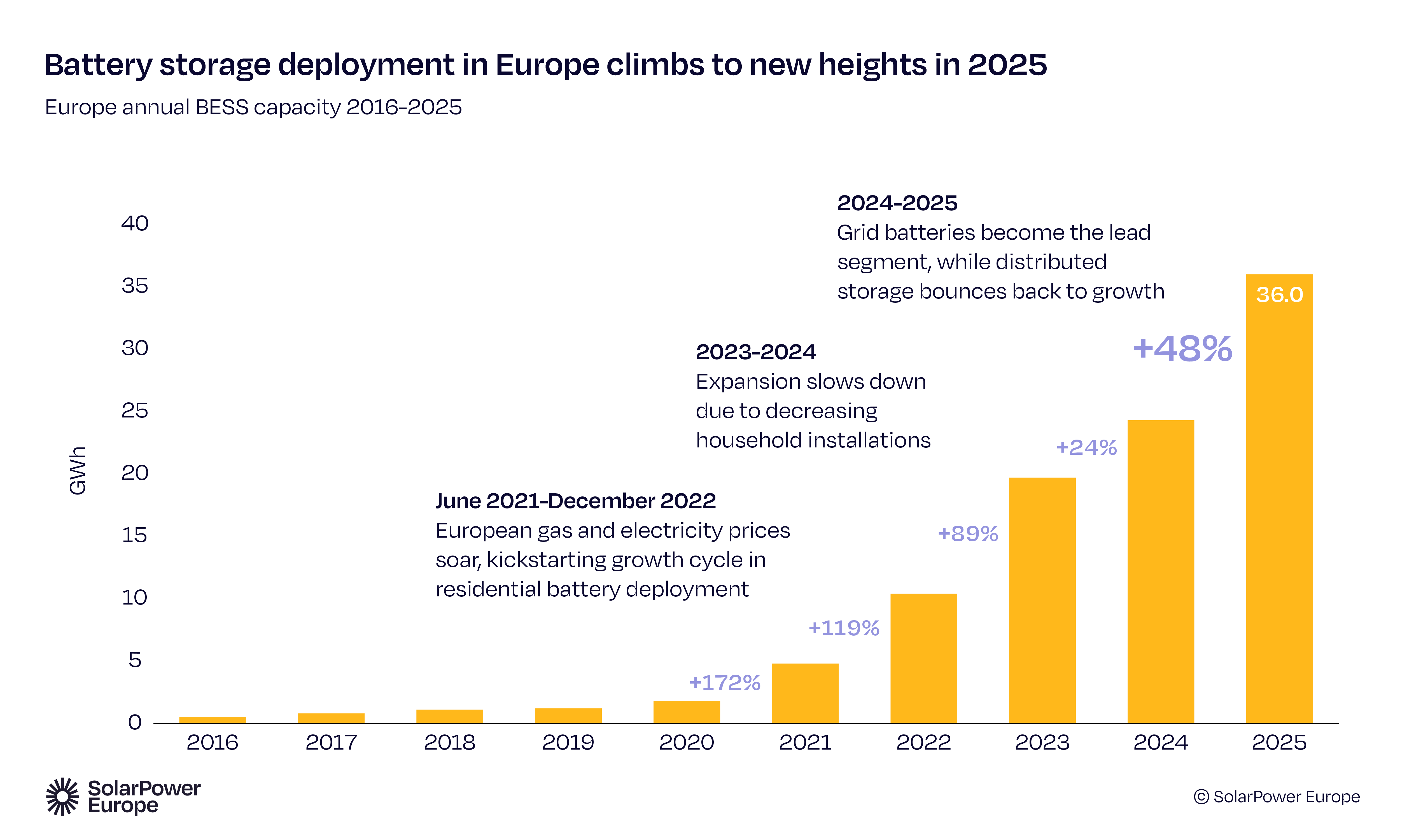
New data from SolarPower Europe confirms that 2025 was a record-breaking year for new solar installations globally.
A record 664 gigawatts (GW) of solar PV capacity was installed in 2025, according to the trade association’s Global Solar Market Outlook 2026-2030.
The group forecasts some near-term headwinds for the industry, however.
“After extraordinary growth peaks in recent years, market growth slowed to 12% last year, signalling a shift in market dynamics. As solar continues to expand globally, the report also forecasts a temporary decline in installations in 2026, before growth is expected to resume in 2027.”
Battery energy storage market gaining momentum in Europe
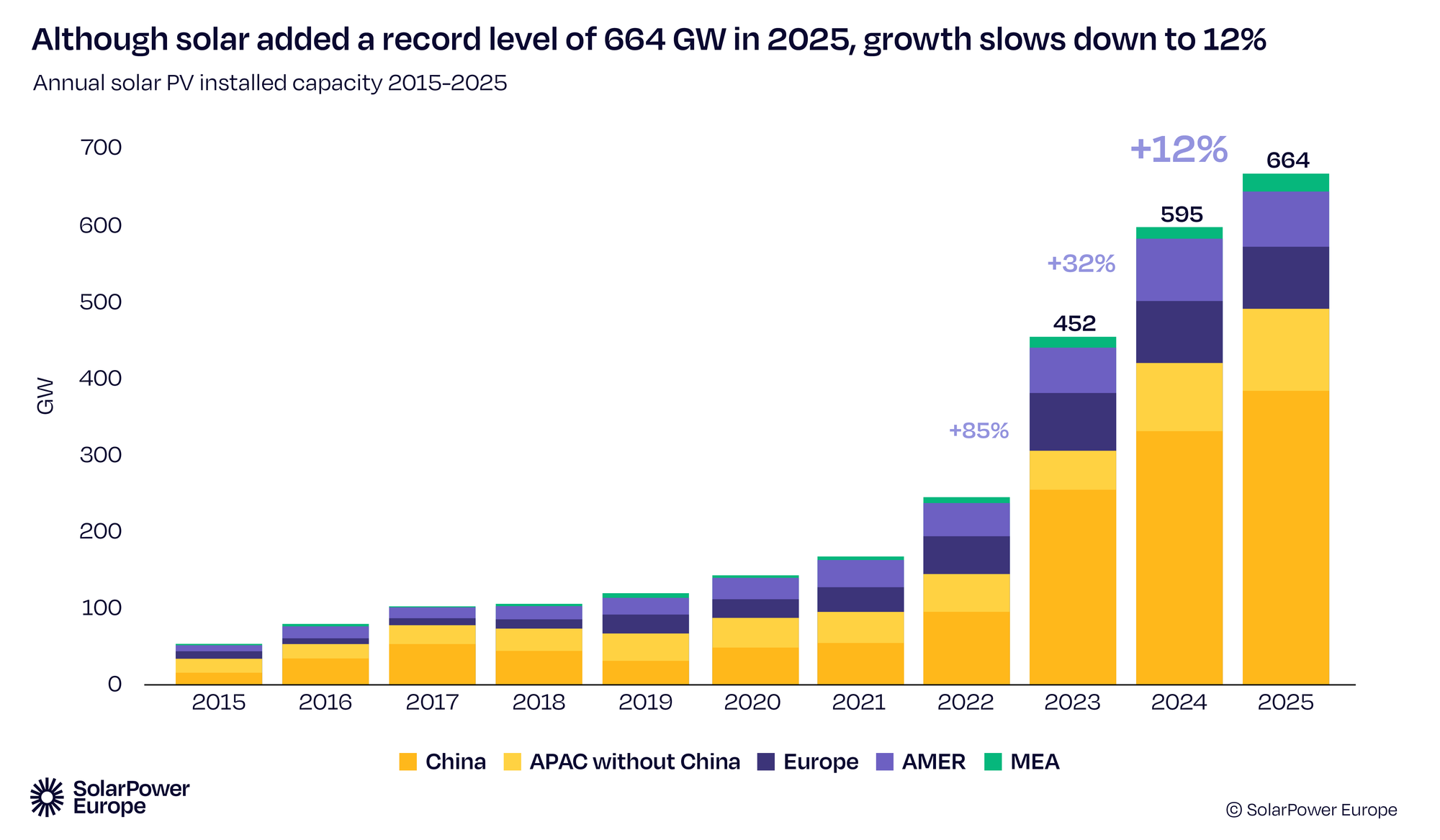
SolarPower Europe also released new data finding robust battery energy storage deployment in Europe last year.
“Europe’s battery storage market continued its record-breaking trajectory in 2025, with 36 GWh of new installations, marking the twelfth consecutive year of growth,” according to the group’s European Battery Market Outlook 2026–2030.
New capacity added in 2025 pushed Europe’s total operational battery capacity beyond 100 gigawatt-hours (GWh) for the first time. Going forward, SolarPower Europe expects annual installations to exceed 50 GWh in 2026 and to hit 138 GWh by 2030.
Solar overtakes gas power in Asia
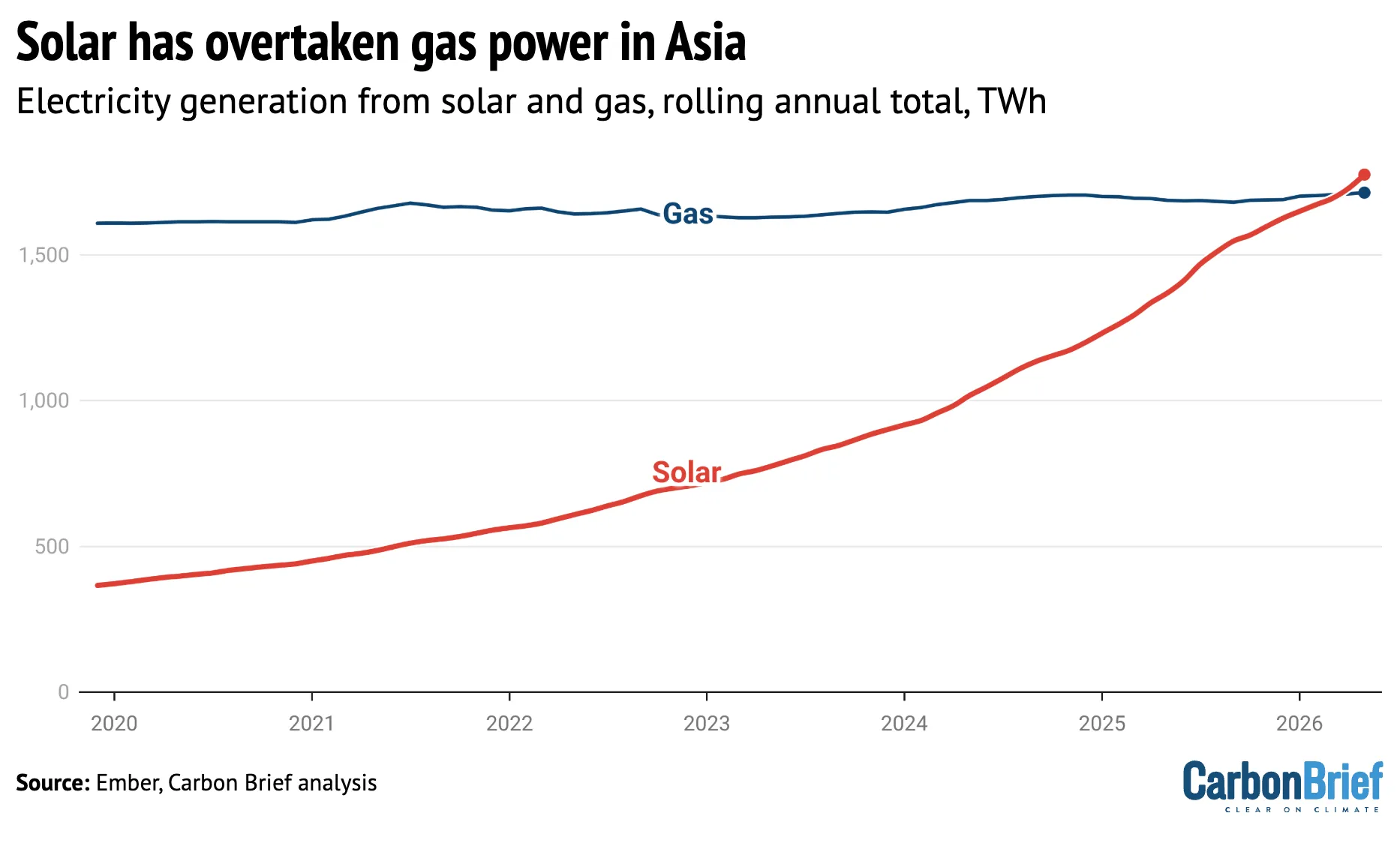
In Asia, solar power has overtaken fossil gas power to become the continent’s third-largest source of electricity, according to new research from Carbon Brief.
“The rapid expansion of solar power in nations such as China, India and Pakistan has seen its annual output increase nearly fourfold since 2020. Asia accounts for around 60% of the world’s solar-power growth in this period, putting the continent at the heart of the global solar boom,” write researchers who worked on the study.
“Coal and hydropower remain Asia's largest sources of electricity, generating roughly 52% and 12% of the continent’s power each year, respectively.”
Cheaper renewables saved countries a half-trillion dollars in 2025
Renewable energy deployment records will continue to fall in the coming years because the technologies are so much cheaper than new fossil fuel projects.
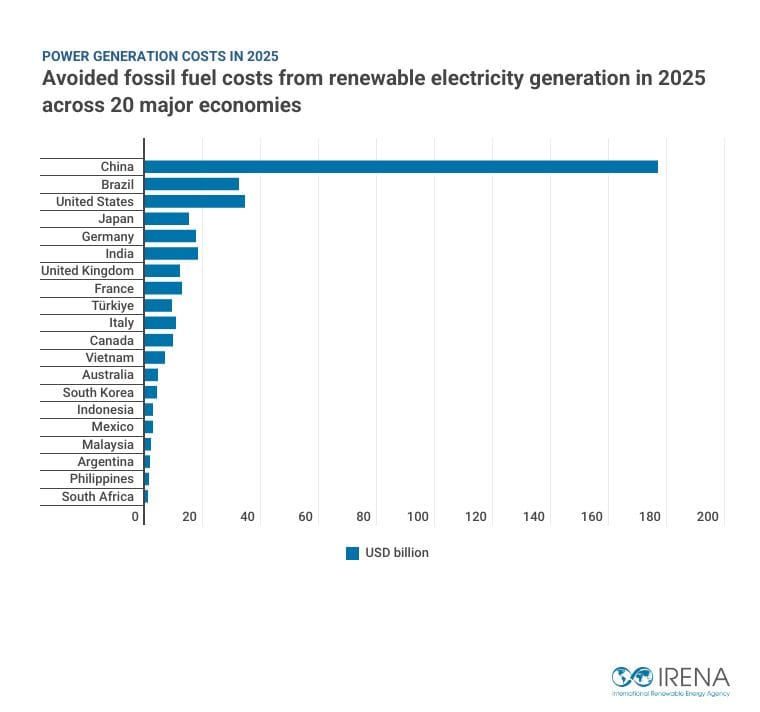
“More than 90% of the utility-scale renewable capacity added in 2025 was cheaper than the lowest-cost new fossil alternative,” finds Renewable Power Generation Costs in 2025, a report released last week by the International Renewable Energy Agency (IRENA).
Renewables are also acting as a hedge against fossil fuel price volatility.
“In total,” finds IRENA, “installed renewables helped avoid an estimated USD 480 billion in fossil-fuel costs in 2025, turning renewables into a geopolitical shock absorber against fossil-volatile systems in energy crisis.”
More UK drivers are going electric – and saving big
New research finds continued momentum behind the sale of electric vehicles in the UK and that drivers are reaping big savings by choosing EVs.
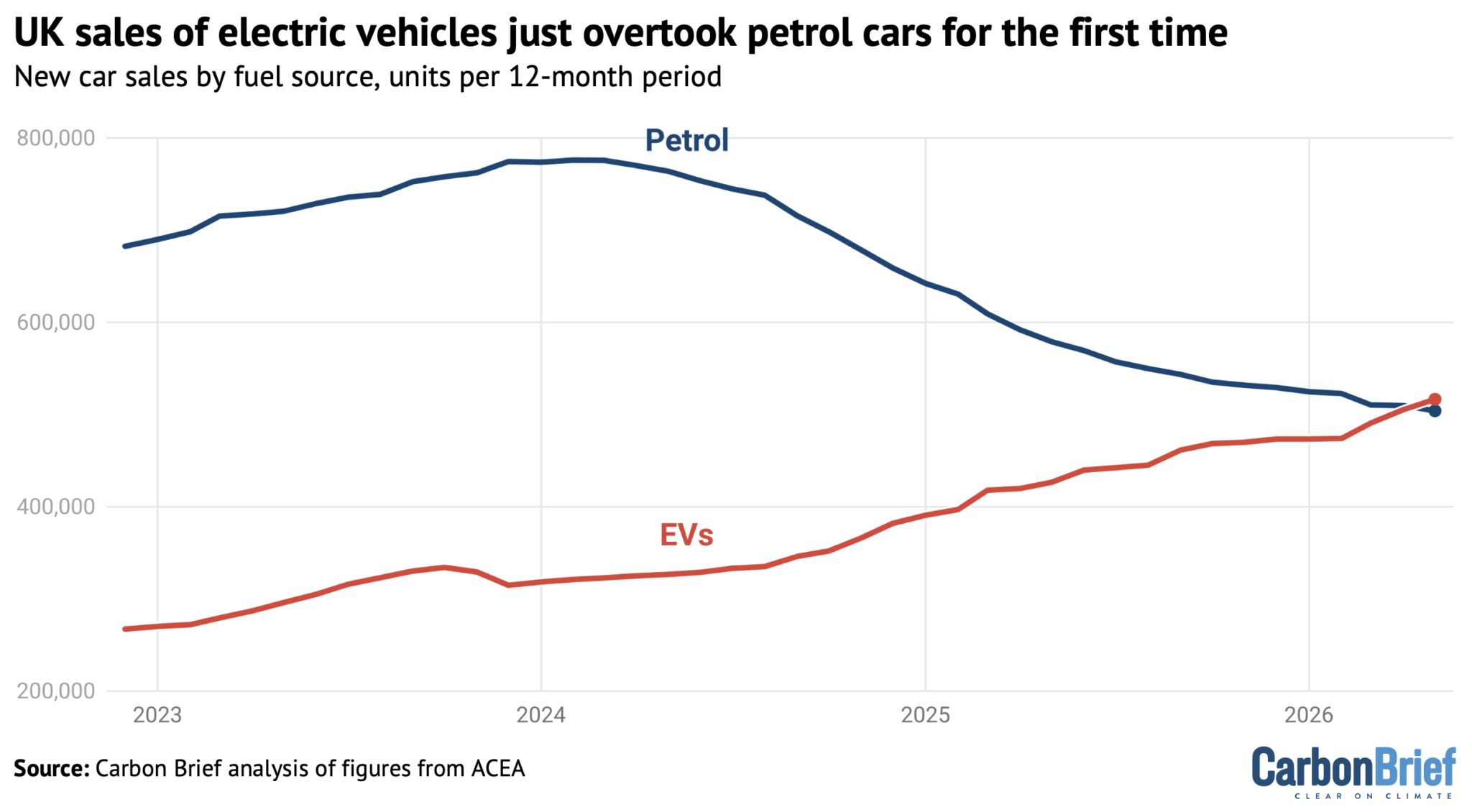
“For the first time in the UK, more new electric vehicles (EVs) have been sold over a 12-month period than petrol cars,” according to a Carbon Brief analysis published last month. “In the 12 months to May 2026, UK consumers bought 516,490 new BEVs, against only 504,010 new petrol cars.”
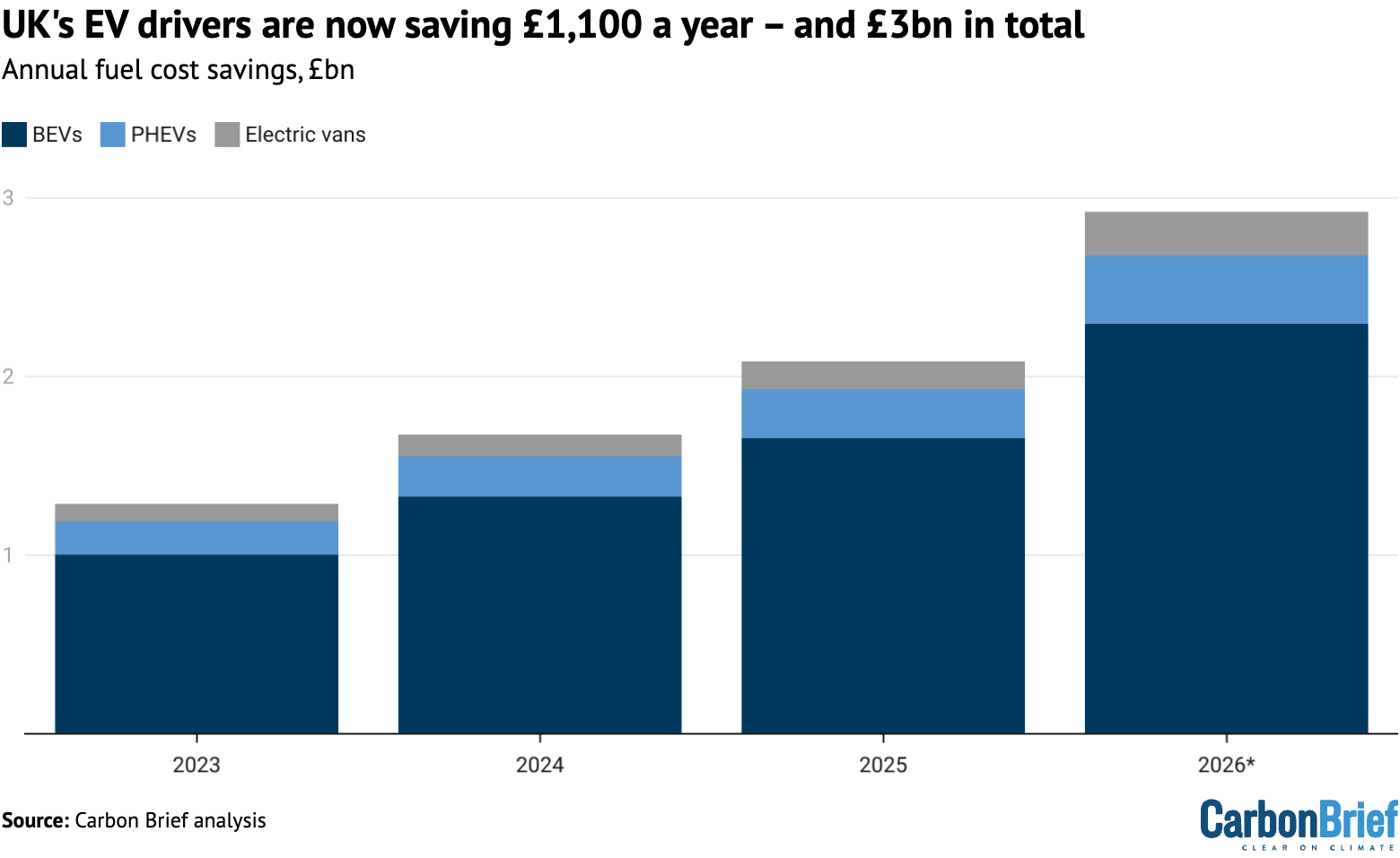
The week before, Carbon Brief published an analysis finding that the nation’s EV drivers are saving more than £1,100 [$1,460] annually – and around £3bn total – in avoided fuel costs.
“In addition, these EVs are avoiding the need for nearly 2.5bn litres of fuel and cutting carbon dioxide (CO2) emissions by nearly 7m tonnes each year,” according to the analysis.
Zero-emission truck sales pick up speed in the U.S.
U.S. sales of zero-emission trucks picked up over the course of 2025, according to new data from CALSTART, a national nonprofit focused on accelerating clean transportation.
“After a slower first half of 2025, zero-emission truck deployment in the US gained momentum in the second half of the year, with ZETs representing 4.14% of all truck deployments from July through December 2025, up from 1.32% in the first half of the year,” finds the analysis.
“The market, even absent tax credits, has shown positive growth. The data points to a strong zero-emission future as operational cost advantages continue to accelerate over fossil fuels, capital costs continue declining, and operator acceptance trends in a positive direction. This report continues to play a vital role in mapping the trajectory and consequences of ZET adoption across the country,” said Jared Schnader, CALSTART’s executive vice president of initiatives, in a press release.
The many benefits of economywide electrification
The benefits of electrification extend well beyond the transportation sector, of course.
An electric heat pump installed in your home, for example, not only delivers high efficiency heating and cooling throughout the year, but it also boosts the value of the home if you choose to sell, according to a study Canary Media’s Alison F. Takemura reported on last month.
“By analyzing more than half a million sales of U.S. homes with ducted heat pumps from 2024 to 2025, the authors found that those with real estate listings mentioning the heat pump typically enjoyed a sales price boost of 0.6% to 1% over homes that didn’t advertise their efficient appliance. This modest lift translates to $2,300 to $3,900 per home, given a median sales price of $399,000,” she writes.
Electrification of U.S. industrial sites would strengthen the manufacturing sector, boost economic growth and jobs, and reduce manufacturers’ exposure to volatile fossil fuel costs, finds a report published last month by the Renewable Thermal Collaborative and the Industrial Heat Pump Alliance.
According to the report, “over the next decade, scaling industrial electrification could support: $254 billion in investment across deployment and manufacturing; $471 billion in total economic output; $185 billion in GDP growth; and 1.66 million jobs.”
Scaling the benefits of electrification economywide, “is critical to UK prosperity, jobs and energy security,” according to a report published last month by Corporate Leaders Group UK, which is convened by the University of Cambridge Institute for Sustainability Leadership.
“Taken together, the evidence presented in this report suggests that electrification is not only essential for meeting climate targets – it is a strategic economic choice. A faster and more co-ordinated transition to electrification can deliver stronger growth, greater resilience and improved energy security for the UK,” the authors find.
Compared to the “mixed technologies” and “fossil fuel-led” alternatives scenarios, the report finds that electrification:
Drives higher GDP growth, boosts productivity, and supports sustained investment in domestic infrastructure and clean technologies. By 2050, the UK GDP would be over one percentage point larger in the electrification-led scenario than if we continue current policies.
Brings significant employment benefits, creating around 250,000 more jobs than current policies by 2050 in sectors including construction, manufacturing and services.
Improves the UK’s energy security, by reducing dependence on imported oil and gas and lowering exposure to volatile global markets and price shocks.
Harvesting waste heat could save Manchester, UK, billions each year
“Waste heat from industrial sites could be used to heat 85 per cent of homes in Manchester through a large scale heat network, saving an estimated £9bn for the city's residents over 20 years,” reports BusinessGreen’s Amber Rolt.
She writes that a new study published by UK-based energy management company EnergiRaven and supported by Danish consultancy Viegand Maagøe, “uses data from Ordnance Survey (OS) to calculate how heat wasted by data centres, power plants, water treatment facilities, breweries, and other industrial sites across the region could be used to heat homes across Manchester through a large scale 'Heat Highway' district heating system.”
“A regional approach to heat infrastructure could help reduce household bills across Greater Manchester,” finds EnergiRaven. “By recovering and sharing surplus heat through the Manchester Heat Highway, the average cost of heat could fall from 8.7p/kWh to 5.4p/kWh – a reduction of around 38% compared with what Mancunians are paying today.”

U.S. energy affordability policy action tracker
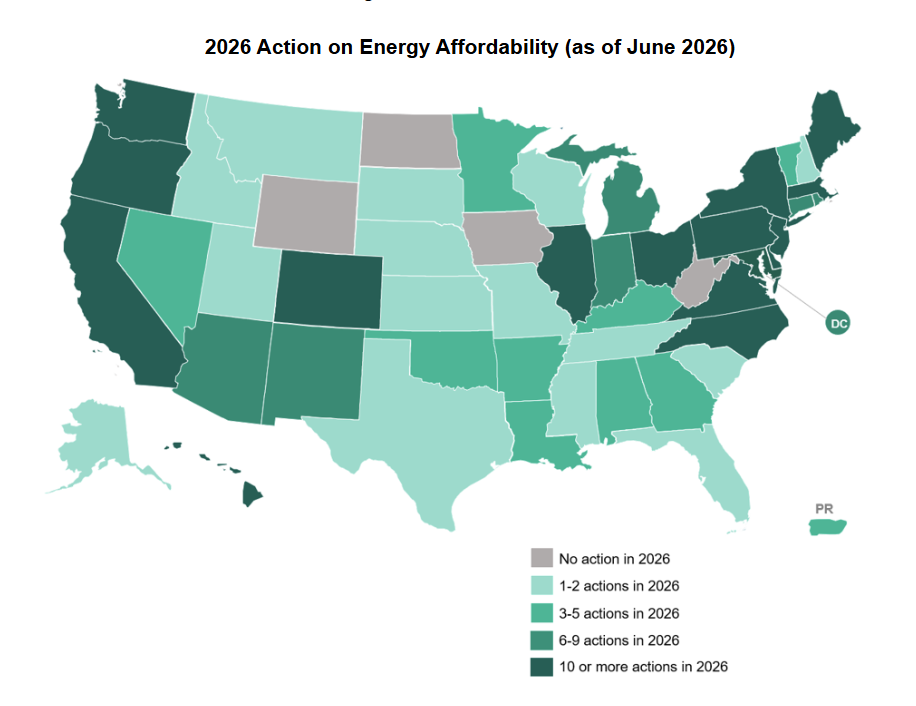
The NC Clean Energy Technology Center just released the first installment of a new quarterly report that “will provide updates on state and utility actions to address rising electricity costs, including utility business model reforms, utility oversight and cost recovery, infrastructure planning and procurement processes, customer cost allocation, and customer programs.”
This inaugural report finds that 46 states, the District of Columbia, and Puerto Rico took a total of 362 actions to address energy affordability this year, through June 2026.
According to the report, the largest number of actions related to large load cost-shift prevention (including large load tariffs); customer bill assistance programs; incentive programs for low- and moderate-income customers; and performance incentive mechanisms.
Clean energy = the cheapest way to meet rising electricity demand
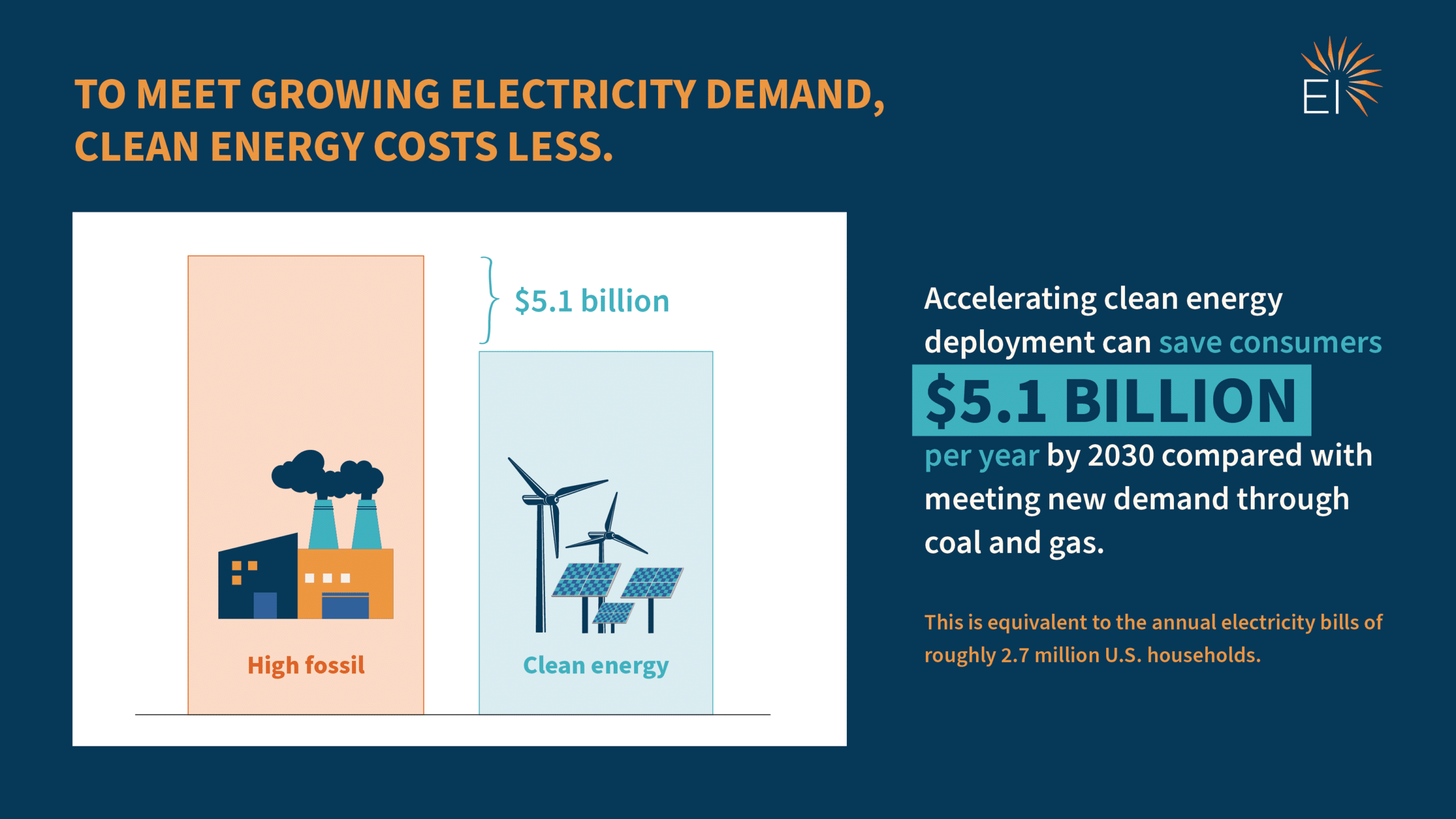
A new report from the Energy Innovation think tank finds that clean energy is the cheapest way to meet rising U.S. electricity demand.
“Modeling shows meeting forecasted electricity demand growth with fossil fuels will add $29.7 billion annually to customer bills by 2030. But clean energy can reliably meet load growth and save $5 billion per year – keeping the lights on and AI growing for less money,” write the report authors.
“An electricity grid that meets growing demand with clean energy functions like an insurance policy for consumers – the more fuel prices surge, the greater the savings,” writes Energy Innovation’s Director of Electricity Brendan Pierpont.
The “hidden costs” of fossil gas power
Clean energy is even more competitive against fossil fuels when the “hidden costs” of supporting infrastructure are included, finds a new report.
“While utilities often seek approval for new gas plants based solely on their upfront construction costs, a new analysis by Current Energy Group and GridLab reveals these ‘sticker prices’ omit a slew of hidden infrastructure costs, including mandatory, long-term contracts for firm pipeline transportation, gas storage and gas processing equipment,” writes GridLab’s Cassady Craighill.
“Accounting for these fixed, decades-long fuel liabilities routinely inflates a project’s true cost to consumers by roughly 30%, significantly altering its economic competitiveness against cleaner energy resources,” she adds.
“That’s like budgeting for the price of a new house and a new car next year, but failing to account for the closing costs and realtor fees, utility bills, moving expenses, insurance, taxes, gas and maintenance.”