What I’m reading: The UK’s “greenest” PM exits, opportunities to invest in clean energy, California challenges Trump's offshore wind deals, and more
Quitting Carbon's biweekly roundup of energy transition developments you might have missed.


Quitting Carbon is a 100% subscriber-funded publication. To support my work, please consider becoming a paid subscriber, making a one-time donation, or gifting a paid subscription.
Welcome back to another recap of highlights from what I’ve been reading.
A reminder: You still have time to take advantage of the special offer to get 25% off an annual subscription to this newsletter. If you've thought about becoming a paid subscriber, or gifting a paid subscription to a friend or colleague, now is the perfect time to do so. Subscribe here, before the end of the month, to receive the special offer. Thank you for your support.
Have a great weekend and thanks, as always, for reading.
The UK’s “greenest” PM exits
On Monday, UK Prime Minister Keir Starmer announced his resignation. He will step down after the Labour Party elects its new leader – and the country’s next prime minister – in the coming weeks, with former Greater Manchester Mayor Andy Burnham tipped to take over at 10 Downing Street.
The resignation prompted one of Britain’s most insightful observers of the country’s energy transition, BusinessGreen Editor-in-Chief James Murray, to reflect on Starmer’s achievements – and failures – in office.
“You can make a case that over the past two years Starmer has been the greenest prime minister in British history,” he writes.
Indeed, at the one-year mark of Starmer’s government, last July, I had checked in on its clean energy achievements to date in this newsletter.
From there, Murray gets us caught up on Starmer’s many achievements at the time of his resignation:
His government lifted the ban on onshore wind farms, delivered a record breaking clean energy auction and project pipeline, overhauled the grid development regime, eased planning barriers for low carbon infrastructure, re-introduced grants for electric vehicles and turbocharged demand for zero emission vehicles, increased grants for heat pumps, launched GB Energy and Great British Railway, green lit Sizewell C and advanced small modular reactors, delivered new green building standards for renters and new builds, strengthened water regulations, boosted funding for climate resilience and sustainable farming, and topped it all off by confirming a world leading target to cut emissions by 87 per cent against 1990 levels by 2040. Last year, he even declared that net zero and climate action was in his government's 'DNA'.
And yet, much like Joe Biden’s inability to sell his own government’s considerable clean energy achievements here in the U.S., Starmer failed to promote or defend these wins to voters.
Murray calls it “one of the flaws that defined his premiership – a refusal to promote the bold climate policies his government has enacted.”
Climate change was missing from Starmer’s resignation speech, too.
“In his short list of achievements yesterday morning,” writes Murray, “Starmer did not see fit to mention climate change once. He made no claim to the agenda that has arguably been one of the few unalloyed successes of his government and which poll after poll shows plays well with Labour's base and the voters it is losing to the Greens and Lib Dems.”
“Starmer deserves more credit than he gets,” he concludes. “But he has been the architect of his own political demise and it will now fall to his successor to build on the progress made over the past two years, while providing a much more full-throated defence of a decarbonisation strategy that is critical to the UK's future prosperity and security.”
The same holds true in the U.S.
At a time when even blue state governors are weakening climate mandates and scapegoating energy efficiency, ostensibly to address affordability concerns, we need politicians who are willing to offer a full-throated defense of climate action on moral and economic grounds.
Policymakers should make it easier to invest in clean energy
One of the key insights I gleaned from my time living in and reporting from Denmark is that lawmakers everywhere should make it much easier for their constituents to invest in clean energy.
Danish policymakers realized relatively early in the country’s energy transition that local wind energy projects would face less opposition if they required developers to sell shares of the project to nearby residents.
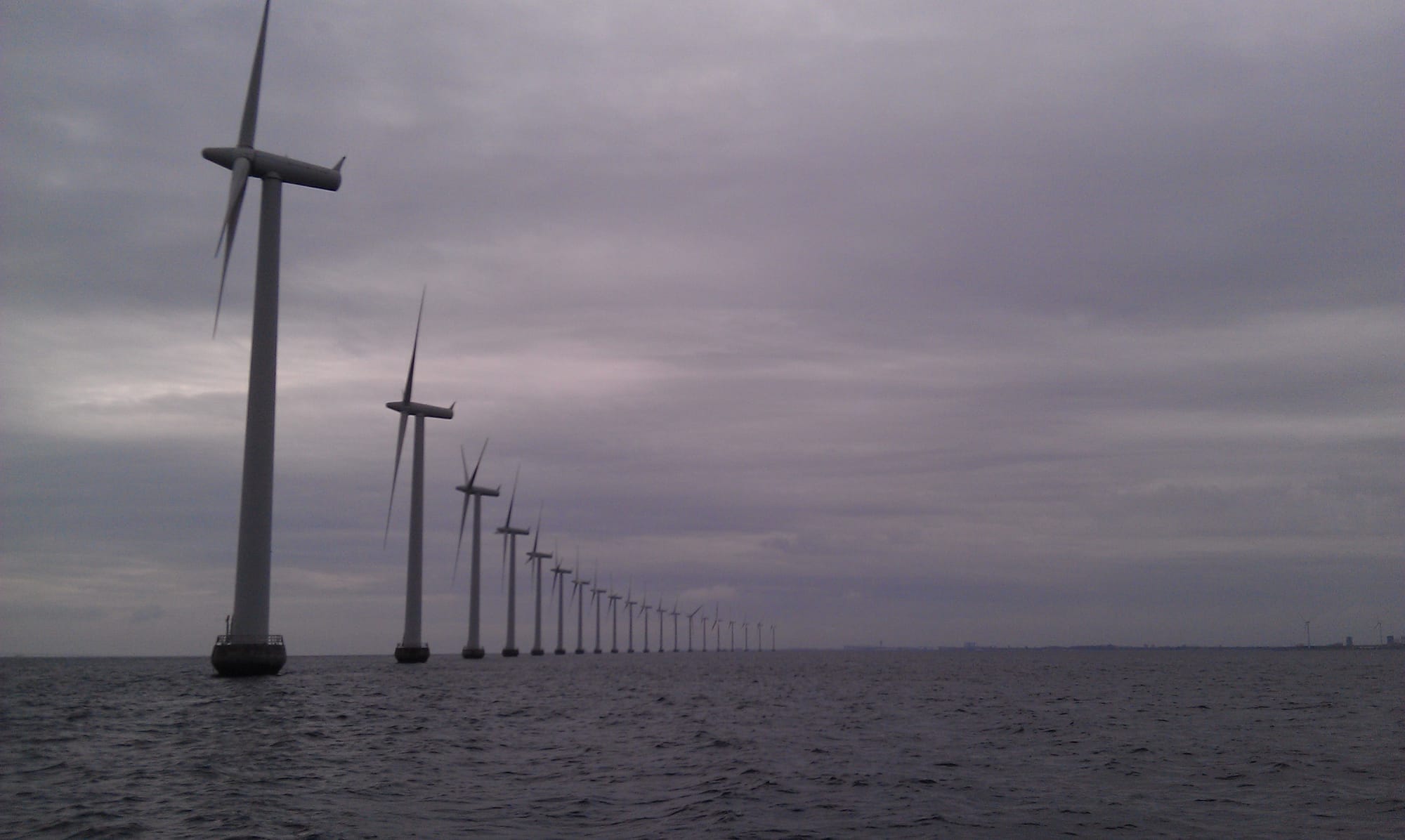
Several of my Danish colleagues, for example, were investors in the cooperative that owns 50% of the Middelgrunden offshore wind farm, located just outside Copenhagen Harbor.
A project in the UK just demonstrated how much demand exists for these kinds of local clean energy investment opportunities.
Earlier this month, the British energy giant Octopus Energy offered a wind turbine investment opportunity that sold out in “record time,” reports BusinessGreen’s Amber Rolt.
The opportunity to invest in a repowered wind turbine in North Cornwall was marketed through Octopus Energy’s Collective platform, which enables investors to back renewable energy projects, with investments starting from just £25 [$33].
The project “raised £550,000 in just over an hour, attracting 180 bids as over half the backers invested £1,000 or less in the project,” writes Rolt.
Octopus Energy’s Collective platform, which launched last year, was the “UK's first Financial Conduct Authority (FAC)-regulated investment platform operated by an energy company.”
“People don't just want cleaner, cheaper energy – they want to benefit from the energy revolution. The fact this latest project sold out in a little over an hour shows how strong the demand is,” Zoisa North-Bond, CEO at Octopus Energy Collective, told Rolt.
California goes to court to block the Trump administration’s offshore wind deals
In my column last week on the Trump administration’s recent string of legal setbacks on clean energy development, I mentioned a suit was likely coming any day from California Attorney General Rob Bonta (D) to challenge a deal between the administration and Golden State Wind LLC under which the developer abandoned a lease to develop wind power offshore the Central California coast.
On Tuesday, the notice of that suit arrived, with California stating it intended to sue the Department of the Interior “regarding its illegal buyout of the Golden State Wind LLC offshore wind lease under the Outer Continental Shelf Lands Act.”
“At a time when the country needs more reliable and sustainable power supply, the Trump Administration is busy using taxpayer money to strike backroom buyouts that make clean-energy projects disappear,” said Bonta in a press release.
California’s standing to sue is based on the more than $100 million it has invested in ports, transmission, and the supply chain to support offshore wind development in the state – “investments which may be lost if the Trump administration succeeds in halting offshore wind development.”
California’s action on Tuesday initiates a 60-day window for the Interior Department and Golden State Wind “to cure the OCSLA violations before California files suit to put a stop to this unlawful buyout.”
Last week, the Trump administration agreed to a deal with the offshore wind developer Invenergy to abandon a lease for a second wind energy zone offshore California’s Central Coast.
California appears poised to challenge that deal in court as well.
The California Energy Commission (CEC) issued an administrative investigative subpoena to Invenergy on June 23.
“That subpoena demands a copy of the settlement agreement – which DOI has not made public – and information concerning its basis, negotiation, and impact,” according to the CEC.
The offshore wind industry’s trade association in California welcomed the moves to challenge the lease termination deals.
“We support California’s efforts to investigate and challenge these latest attempts by the Trump Administration to delay needed U.S. offshore wind power,” Adam Stern, executive director of Offshore Wind California, said in a statement.
France launches massive offshore wind tender
France is looking to join Denmark, Germany, and the UK in the ranks of Europe’s largest markets for offshore wind power.
“The French government published a call for tenders notice in the Official Journal of the European Union on 11 June 2026, launching the process to award development rights for eleven offshore wind projects, seven floating and four fixed-bottom, totalling a little over 10 GW [gigawatts],” reports offshoreWIND.biz’s Adrijana Buljan.
Projects are planned for waters off the coasts of Normandy and Brittany as well as in the South Atlantic and the Mediterranean Sea.
Particularly notable to me are the sizes of the largest of the floating projects. Floating offshore wind has been transitioning from the pilot to commercialization stage of development.
The largest of the proposed floating projects in this tender, Bretagne Nord Ouest and Golfe du Lion Centre 2, would both exceed the gigawatt scale at 1.2 GW and 1.1 GW, respectively.
The deadline for developers to submit applications for the tender is October 12.
Bonus: Scenes from Portland, Oregon
Portland, Oregon, is my favorite U.S. city for many reasons, including the food, the craft beer, and the neighborhoods. And also because – by American standards – it's so easily explored on foot.
Walk a city and you're more likely to make discoveries, be it a lovely mural, public art in a park, or the perfect shot of the emerging moon at dusk – as I did in Portland last weekend.





Credit: Justin Gerdes.